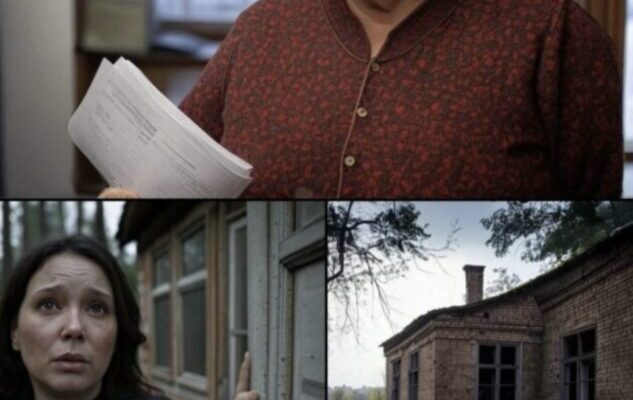
…When Alina opened the door of the old cottage in Liskova Poliana, a strange chill greeted her — as if the house itself was still breathing.
Everything smelled of dust, aged wood, and something familiar… but she couldn’t quite name it.
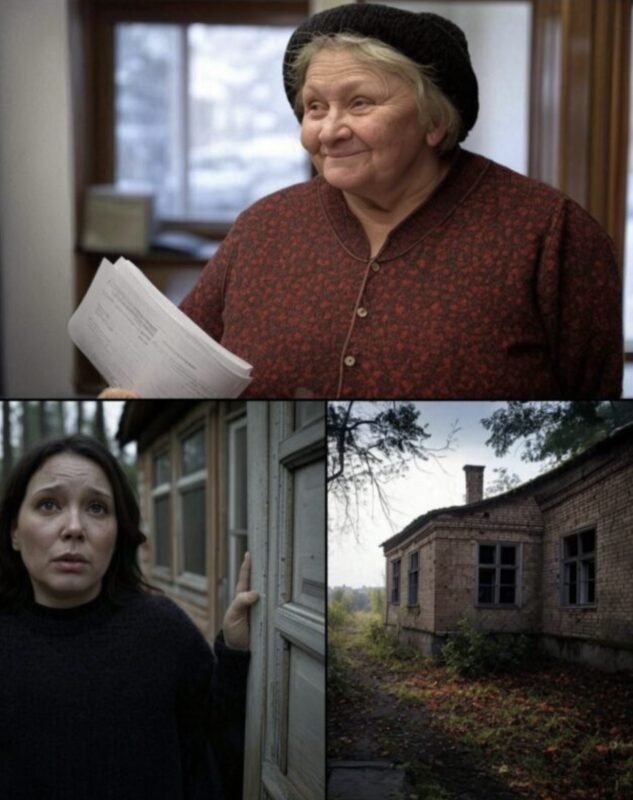
Hesitantly, she stepped inside and looked around — the walls were covered with black-and-white photos, in the center of the room stood a small solid wood table, and in the corner — an old chair that seemed as if someone had just risen from it.
— What is this…? — she whispered, not expecting an answer.
On the table lay a simple but beautifully carved wooden box.
With trembling fingers, she opened it.
Inside was a stack of letters tied with a blue ribbon, and on top — a photo of her and Mikita at a barbecue at a campsite.
On the back, Mikita’s handwriting — clumsy, but warm:
“Alina, if you’re reading this, it means I’m gone. But not completely.”
Tears welled up in her eyes. She untied the ribbon and began reading the first letter.
My love,
I know this is hard right now. And I know you’re angry. You’re probably wondering why I left you this house — and not everything we had together. But please, read everything.
I secretly bought this cottage with the money from our first postponed vacation.
Do you remember? That time when you wanted to go to the mountains, but we stayed home because I had to work unexpectedly.
I promised you then: “Our time will come.”
Here, in Liskova Poliana, I wanted to give you a place of refuge.
A place where you can breathe, without the daily pain.
Without feeling lost in the city that keeps reminding us of what we lost.
This house isn’t just a ruin, Alina. There’s already electricity in the garden, and I started the renovations.
The neighbor, Uncle Ivan, helped me with everything. He knows the whole story.
You have every right to be angry with me.
But I know that one day you’ll understand. I didn’t want you to stay in a place that would always hurt you.
To my mother… I left everything else, so she wouldn’t feel alone. I knew you were the stronger one.
Do what you want with the house. Renovate it, sell it, turn it into a guesthouse.
But please, stay here for a while. Breathe deeply. Look at the evening sky. There’s peace here. There’s healing.
And maybe… a new beginning.
I love you beyond time,
Mikita
Alina set the letter down, trembling. She stepped out into the yard and saw something she hadn’t noticed before: The garden, though a bit overgrown, had neat garden beds, an improvised swing hanging from an old pear tree, and a small greenhouse made of plastic.
The neighbor, Uncle Ivan, suddenly appeared, holding a cup of fruit compote.
— So you came, girl… Mikita told me you would one day.
He prepared everything for you. Over there are the tools, and out back is the renovation material… and if you need help — I’ll come by with the boys.
She couldn’t say a single word.
— He loved this place. He always said this is where you two would grow old.
Tears ran down Alina’s cheeks again, but this time it wasn’t pain — it was a warm longing.
Weeks passed. Then months. In one corner of the house, Alina set up a small ceramics workshop — something she had always dreamed of, but never dared to try.
The villagers began to visit her. Children asked her to teach them how to paint cups.
Her cups, always painted in cheerful colors, carried simple words: “Hope,” “Patience,” “Love,” “Beginning.”
One day, she received a letter from Olesea Pawliwna, her mother-in-law. It was simple, but sincere:
“Forgive me, Alina. I didn’t know what Mikita had planned. I didn’t understand it either.
But now, after being there — in your house — I felt that he knew exactly what he was doing. I’d like to visit you. To help you.”
Alina smiled, pressing the letter to her chest.
One morning, as she opened the door of the now-renovated house — it smelled of fresh bread, and the wind rustled through the leaves — she whispered:
— You were right, Mikita. It is a new beginning.
And for the first time in a long time, she set water to boil and took out the old, cracked cup with the faded inscription.
She poured the tea and placed it in front of an empty chair.
— For you.
The silence was no longer painful. It was now full of memories.
And full of love.