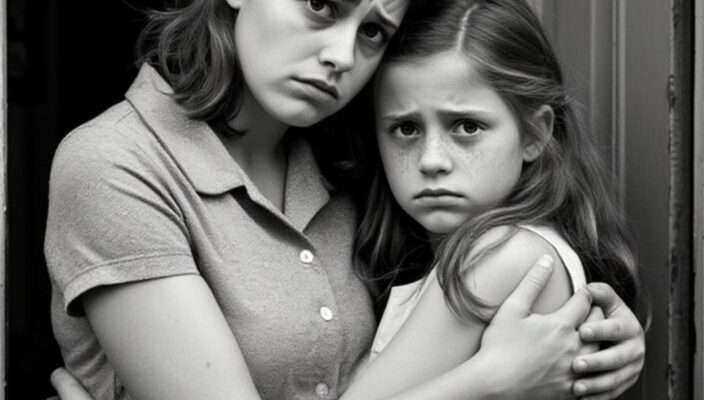
That evening, for the first time, I noticed that the milk in the fridge had long gone bad, and the bread was hard as a rock.
It felt like time had frozen between “yesterday” and “tomorrow,” turning into something unreal and sticky, like morning fog on the windowpane.
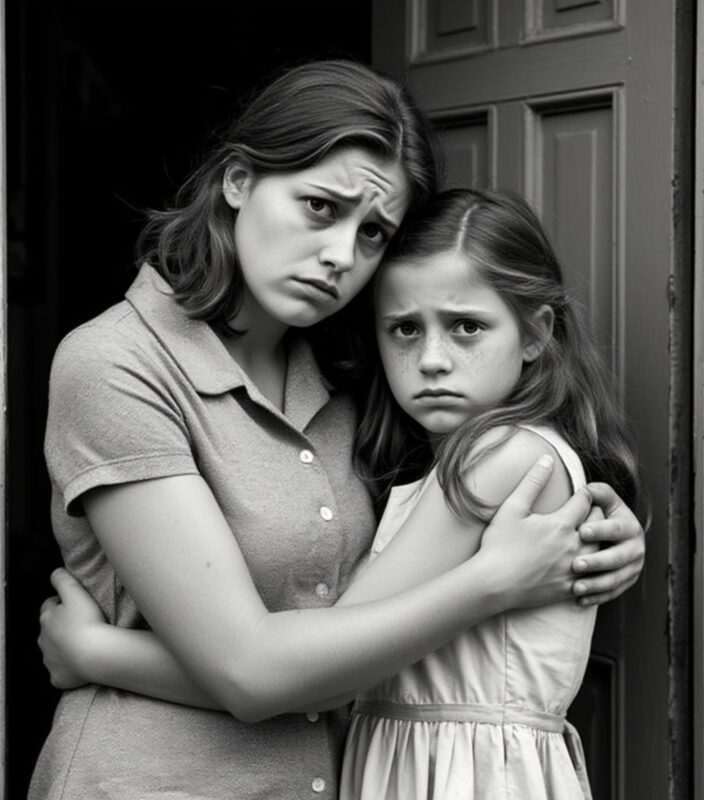
My daughter was scribbling in the corner of her school notebook, drawing imaginary cats.
I watched her and felt everything inside me tremble — how do you explain to a child that tomorrow, the world will no longer be the same?
Andrey walked into the room. His winter boots always squeaked loudly — almost like he was doing it for dramatic effect.
“We need to talk,” he said.
“Can it wait? Alina’s doing her homework…”
“No. Now.”
We never raised our voices. Even in arguments, we spoke softly, almost in whispers, as if our conscience were eavesdropping nearby.
“I… fell in love with someone else. I can’t do this anymore, Olya. Everything’s changed. I’m sorry.”
I was silent. I don’t remember how many minutes passed in that mute space.
“Nastya and I decided to live together. Here.”
I automatically brushed a strand of hair from Alina’s face. She didn’t seem to be listening, but I feared she would hear everything at any moment.
“Maybe you could go stay with your mom for now? Or just vacate the apartment?
It’s hard for us to rent… You understand, don’t you?”
I wanted to scream, smash plates, grab his shoulders and shout: “This is our home! That’s your daughter!”
But instead, I simply asked:
“Where are we supposed to go, Andrey? Think about what you’re saying.”
He looked away, absently tugging on his belt.
“Well… you could stay with Svetlana Mikhailovna for a while.
Or rent something near the school. I’ll help later, if needed.”
Alina suddenly looked up.
“Mom, why is Dad so mean?”
My throat tightened. I couldn’t cry. Not now.
“Daddy’s not mean. Grown-ups just… sometimes can’t be together anymore, sweetheart.”
He went to the bedroom. I heard the door slam and the sound of a wheeled bag rolling across the floor.
That night I fell asleep on a kitchen stool, head in my arms. If we really got thrown out — where would we go?
Freedom stank of Andrey’s tools and an old, unwashed blanket.
Only then did it hit me: what I thought was mine… was turning into nothing.
There are moments in life that divide everything into “before” and “after.”
This was it — I was without a home for the first time. Just walls, tile, an old armchair, and dust on the windowsill.
Nothing else belonged to me anymore.
When Andrey stopped greeting me in the mornings, the silence turned not just quiet, but suffocating.
Even the kettle on the stove no longer boiled — it groaned softly, as if afraid to disturb the new silence.
Varya, our downstairs neighbor, was only seen on the stairwell.
I noticed how she glanced sideways when I took out the trash.
Her look was like a cracked mirror: she knew everything, had seen it all, and now sensed other people’s pain from a mile away.
“Hang in there,” she once whispered. I nearly cried from that simple, living kindness.
Every evening became a mental test. I mapped out tomorrow: If he kicks us out — what will I do?
A duffel bag held our clothes, and the documents were under my pillow — oddly, the most valuable things now weren’t my wedding ring or last name, but passports and Alina’s insurance.
When Andrey asked:
“How long are you going to stay here?”
“I won’t leave until it’s settled legally,” I said quietly.
There was a flicker of surprise — maybe even irritation — in his eyes.
He didn’t expect me to stand my ground?
I sat at the computer, searching for lawyers.
A woman with crimson lipstick (recognized her from her website photo) called and explained briefly:
“If the child is officially registered here, they can’t just throw you out.
You can file for a stay of eviction through child services and the court.”
My knees buckled. It felt like I was learning to walk again — slowly, like after an illness.
Alina drew a picture of me: “You’re beautiful, Mommy,” she smiled, but her wide eyes betrayed a sleepless night.
“I won’t let anyone else in our house,” she whispered before bed.
“Even if all the dads go crazy.”
I nodded and thought: I just need to stay sane myself.
I put the documents in an envelope. Asked myself: Do I have the strength to make it to tomorrow, to see the lawyer and not cry in the corridor?
Sometimes the scariest thing isn’t someone else’s cowardice — it’s your own weakness.
When your hands tremble not from cold, but because there’s no one left to lean on — no one’s coming, no one will help.
At child services, the corridor smelled of old linoleum and other people’s heavy exhaustion.
The woman at the desk wrote something in a notebook — time seemed not to touch her.
I held Alina’s hand, her small palm tucked into mine like a frightened sparrow under a wing.
And I understood in that moment: I can’t be afraid anymore.
Because if I’m scared — then so is my child.
The lawyer was a middle-aged man with cold, nearly lifeless eyes.
He spoke in legal jargon, as if he were part of the bureaucratic machine.
“You’re in a good position,” he said. “A child can’t be evicted just like that.
Residence and registration are serious arguments. File a claim with child services.
It may take up to a month to process, but you’re already protected from forced eviction.”
For the first time in months, a spark of anger broke through the swamp of despair.
“I won’t give Alina to anyone.”
I said it out loud, in a place that smelled of paper and fear.
I wanted those words to become a spell — a shield.
Andrey came home tense and irritated.
Behind him stood Nastya — a stranger, her face unreadable.
“You went to a lawyer?” he snapped. “I know everything.
You’ll lose anyway.”
I calmly looked into his eyes.
“I’m not going anywhere. You can lose a lot in life — but not the right to be a mother.”
“You think you’re some kind of heroine?”
He shut himself in the bedroom. And that’s when I felt it — the worst was behind me.
“Mom, let’s do homework together,” Alina said.
“I want to write a fairy tale.”
I smiled through my exhaustion. As long as my child is beside me, as long as the house stands — there’s something to hold on to.
When there’s no way back, the only path is forward.
At night, I no longer waited for dawn — I fell asleep thinking: the most important thing is to be brave while my daughter sleeps peacefully. Everything else — I’ll survive.
The legal battle dragged on for weeks: letters, summons, formalities.
Andrey delivered documents with a stone-cold face.
We spoke only through lawyers, like strangers.
I studied the laws: parental rights, responsibilities, child protection. Every paragraph became a pillar.
The court ruled decisively: since a minor was registered in the apartment, eviction would only be possible through court and only if there was alternative housing — which Andrey didn’t have.
The child services’ opinion also sided with us.
Andrey grew anxious, visited less often. His new woman didn’t want to live in a house filled with someone else’s child, someone else’s memories.
In the end, he gave up. He realized threats and pressure changed nothing.
The papers officially confirmed our right to stay — at least until Alina comes of age.
The house became ours again, for many years to come.
Spring arrived quietly, almost without notice. I didn’t even realize when the snow outside the window melted.
The apartment began to smell of fresh bread and paint — neighbors were renovating, and I just opened the windows wide, letting all the pain and fear escape.
Andrey left suddenly. That evening, he packed two bags in silence and said nothing to his daughter.
The new woman never even crossed the threshold — as if afraid of a space filled with someone else’s memories.
Just the thud of a boot, and a faint:
“Olya… I’m sorry.”
I didn’t respond. Not out of pride — I simply had no strength.
There’s a point when even anger becomes unnecessary.
His winter boots, books, and ties still lay in the closet.
But suddenly, they had no power over me.
The house was mine again — just mine and Alina’s.
“My mom is strong,” Alina said during her 4th-grade graduation poem rehearsal.
For the first time, I couldn’t hold back — I cried, not from pain, but from love.
When your child looks at you, you relearn how to be strong.
The cold in the house vanished on its own — probably with Alina’s first laugh in the kitchen.
One day, Varya rang the doorbell with a bag of fresh buns.
“Mind if I come in for tea? I just… wanted to support you.”
We sat in silence for a while. She said:
“You seem like a different person.”
I nodded. Yes, I was different.
Now I knew how to be afraid, but I no longer hid behind someone else’s back.
A week later, my phone rang. The screen showed the name: “Andrey.” It used to say “husband.”
“Olya, may I… I’d like to see Alina. Talk to her…”
His voice was tired, almost pitiful, like winter had taken everything from him — even his confidence.
I thought: maybe I’ll forgive him one day. But not for him — for me.
“Come this weekend. No conditions. No complaints.”
He was silent for a while, then quietly agreed.
The past began to crumble, like dust from the bottom shelf.
What I feared most in February turned out to be nothing.
There were no more foreign footsteps in the house — only the sound of a child’s laughter echoing through the rooms.
I bake pies again. And I recognize my reflection in the mirror once more.
One thing I’ll never forget:
If someone tries to throw you out — don’t believe it.
A strong woman and her child always stay home.
Because their home is inside them.
And everything else can be preserved — as long as you don’t let yourself break.