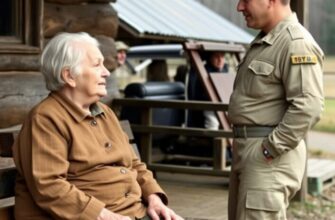
Kirill walked down the street, noticing nothing around him.
As if through a fog, he pushed forward, bumping into passersby who grumbled at him — but he didn’t hear them.

He didn’t know where he was or what part of the city surrounded him.
Everything seemed distant and foreign. The man had turned into a walking void: his gaze was lifeless, his face frozen, his thoughts absent.
He only came to when someone shook him so hard his head spun and his whole body trembled.
It turned out he was standing in the middle of a narrow alley, right in front of a car with its driver’s door open.
Beside him stood a tall, broad man — probably the driver himself — gripping Kirill’s jacket and cursing fiercely.
Kirill ran his hand over his face, trying to shake off the stupor.
Seeing a flicker of awareness in the young man’s eyes, the man growled:
— What’s wrong with you, idiot? High or something?
Kirill shook his head no.
— Then why the hell did you jump in front of my car? Don’t care about yourself — think of others!
I could end up in jail because of you.
If you’re sick of life, doesn’t mean I’m ready to follow you!
— I haven’t had any plans for a while now, — Kirill replied dispassionately. — Sorry, old man… I didn’t mean to.
With that, he walked around the man and slowly moved on, not even knowing where or why.
The driver, about fifty years old, lingered by the car, watching him with confusion, then waved his hand and headed back to the vehicle.
But he suddenly stopped, remembering Kirill’s empty stare and his words.
After a moment’s hesitation, he decisively ran after the young man.
Catching up, Grigory Danilovich examined him more closely and asked:
— Hey, buddy, you alright?
Kirill looked at him questioningly.
— You look like a ghost, I swear.
The man nodded:
— That’s pretty much true… I’m already dead. Only the body walks.
Grigory looked him in the eyes and said firmly:
— No way, brother. I’m not leaving someone like that alone. What if you really collapse before your time?
He took Kirill by the arm, turned him toward his car and added:
— Come on, let’s go. No arguing. That “walking corpse” thing — way too early.
I’m past fifty and still not ready to go anywhere.
And you think your time’s up already?
Kirill shuffled along beside him, barely moving his feet.
He didn’t understand what the stranger was saying, and didn’t even hear the question about where to go.
He just silently let himself be seated in the car.
— Fine, if you won’t say anything, I’ll take you where I think best, — the driver sighed, starting the engine.
After half an hour of quiet driving, they stopped near a cozy little house behind a low fence.
Kirill finally stirred:
— Where are we?
— My dacha, — replied Grigory Danilovich.
— I live in the city, but move out here in spring.
The air’s different here, the soul can rest. So come on, get out — be my guest.
Kirill got out of the car and followed the host.
— What’s your name? — he asked, just to say something.
— Grigory Danilovich. And yours?
— Kirill.
— Well, now we’re acquainted! Come on in, don’t be shy, — the man invited, noticing that Kirill stood hesitating.
Kirill stepped inside, looked around, and still confused, asked:
— Why did you bring me here?
Grigory laid a hand on his shoulder:
— I couldn’t just leave someone who looks like he’s lost the whole world.
You didn’t give me an address, so I brought you here. You’ll rest, gather yourself — then we’ll figure out what’s next.
Kirill looked around the neat yard, overgrown with flowers, and asked:
— Do you live here alone?
Grigory laughed:
— Alone? No, son. With the whole family. My wife, grandkids, the kids come on weekends.
This dacha is like a second home to us.
At that moment a woman came out of the house and slowly walked toward them.
— Grisha, why are you keeping our guest outside? Bring him in, — she gently scolded her husband.
She was tall like her husband, with neatly styled blond hair, large gray-green eyes, and a slim figure.
Her soft voice created a sense of comfort, as if it dissolved worry and filled the space with calm.
— And here’s my beloved wife! — introduced Grigory Danilovich. — Yekaterina Fyodorovna, my dear!
The woman smiled warmly. Kirill noticed her smile was as calm and kind as everything about her.
— My name is Kirill, — the young man introduced himself.
— Come inside. Lunch is ready, — invited Yekaterina Fyodorovna.
While Kirill washed up, Grigory Danilovich briefly told his wife how he met the young man and why he brought him.
She nodded approvingly:
— You did the right thing, Grisha. Sometimes people just need other people around.
At lunch, no one asked Kirill about his grief.
Grigory and Yekaterina Fyodorovna, seeing his depression, tried to distract him — they spoke about the dacha, laughed at the grandchildren’s jokes, and included the young man in the conversation so he wouldn’t feel like a stranger.
After eating, Grigory took Kirill to the gazebo. At first they talked about the weather, the trees, life in the country… But eventually, Kirill began telling his story.
Grigory listened attentively, not interrupting, only occasionally asking questions.
He understood: the young man needed to talk it out.
Kirill had married young — still in university.
His bride was Ulyana, a third-year student.
Their parents had concerns: too young, no stability, no jobs. But they didn’t interfere.
— You can live with us for now, we’ll help — after that, you’re on your own, — the in-laws agreed at the first meeting.
The wedding was modest, student-style. They lived with Kirill’s parents — in a spacious three-room apartment.
His mother was strict, and he feared how Ulyana would get along with her.
But the women found common ground almost immediately.
Probably because his mother had always wanted a daughter but couldn’t have more children.
In Ulyana, she found a daughter substitute, and that made Kirill incredibly happy.
A year later, they received joyful news: a baby was on the way.
By then, Kirill was working at a law firm — salary still small, but stable.
He dreamed of becoming a successful lawyer, and that goal kept him going.
Fatherhood didn’t scare him — it inspired him.
Ulyana planned to finish university and then take academic leave after the baby’s birth to fully dedicate herself to raising the child.
In early June, their son was born — Vasily. To the grandparents he was “Vasya” or “Vasenka,” and to his parents — “Vasilyok.”
The boy was healthy, active, quickly becoming curious and cheerful.
When he turned one, they visited Ulyana’s parents’ dacha.
Vasilyok was thrilled with the space: hiding in currant bushes, running among tall tomato plants, napping in a hammock between apple trees.
One day, a tiny kitten appeared on the property — white, with a black spot on its head like a little cap.
Gray eyes, sharp claws, tiny teeth — so fragile and defenseless.
It seemed someone had brought it and abandoned it there.
The adults were still deciding what to do with the foundling when Vasilyok walked up to the kitten, gently touched it and said:
— Tyopa!
This moment moved everyone. They decided to keep the kitten.
“Let it live with you,” suggested Ulyana’s mother. “Vasenka can play with it when he visits.”
But summer passed, and the boy grew so fond of the kitten that taking it back to the city without him became impossible.
So they took Tyopa with them.
Tyopa became a real member of the family. He wasn’t just a friend to Vasilyok, but to the entire household.
They would race around the rooms together, go to the kitchen for treats, climb onto Grandpa’s and Dad’s laps.
The kitten slept in the child’s crib next to the boy, burying himself under the blanket each night in the arms of his little master.
They even celebrated their birthday on the same day.
Tragedy struck suddenly. Ulyana was returning home with her son after a regular check-up at the children’s clinic.
On the way, she asked the taxi driver to stop by a store opposite their home.
After buying everything they needed, the woman and child headed across the road.
The light turned green — they confidently stepped onto the crosswalk.
But just then, a car came flying around the nearest corner — without slowing down, it hit them and immediately sped away, turning off in another direction.
From the force of the impact, Ulyana and Vasilyok were thrown apart. Both died instantly.
Kirill remembered almost nothing of what followed: police, ambulance, funeral, legal proceedings…
The driver was found a few days later — eyewitness accounts and surveillance footage helped.
Investigators had to piece together the crash frame by frame to prove that this exact car — a Volkswagen — had caused the tragedy.
An expert examination confirmed that Kirill had lost his family because of that vehicle.
But Kirill didn’t care what sentence the driver would receive. He lost interest in everything.
He stopped talking to friends, barely spoke to his parents, and lived in constant apathy.
His only salvation was Tyopa — the white cat with a black spot on his head.
The young man would sit for hours holding him in his arms. The three-year-old cat, as if understanding his pain, never left his side.
He would wait by the door for his return and follow Kirill around the house.
When Kirill sat on the couch, Tyopa would carefully jump onto his lap, settle in, and start purring.
That purring became Kirill’s comfort. Slowly, he began to emerge from his stupor.
His interest in life, in work, and in people began to return. His parents noticed the change and knew — it was thanks to the cat.
They lovingly called him their “fluffy angel” and spoiled him with treats.
To Kirill, Tyopa became a source of strength.
He would walk with him in the yard and park, putting a harness on the cat first, tell him about his day, and ponder life’s problems to the soothing sound of Tyopa’s purring.
Five years passed this way.
“And today Tyopa’s gone,” Kirill said quietly.
“Maybe he died?” Ekaterina Fyodorovna asked cautiously.
“I don’t know,” the man sighed. “I came home late from work.
Today is the anniversary of their passing. I visited the cemetery, cleaned the graves, spoke to them. But when I came home, no one greeted me. I called out — no Tyopa. Mom was standing there in tears.
Turns out, the cat sat by the door all day, waiting. But when I was late, he grew anxious: he darted around the apartment, meowed, and beat his tail on the floor.
Then the neighbor came in — the door was slightly ajar — and Tyopa slipped out.
My parents searched for him for a long time, but without success. In the morning, I continued: searched the yard, the basement, the nearby streets. No sign of the cat, alive or dead.
That day, I felt like I lost my family all over again.”
He didn’t remember what happened next. He only came to when Grigory Danilovich was shaking him, trying to bring him back to reality.
“That’s quite a story,” said Grigory, shaking his head thoughtfully.
“How far is the cemetery where your family is buried?” asked Ekaterina Fyodorovna, who had been standing silently behind them, leaning against the gazebo railing.
She had tried not to interrupt, just listened.
The men turned around.
“The cemetery?” Grigory asked. “What does that have to do with it?”
“I just thought… Maybe Tyopa sensed you and went to look for you.
There are stories of animals finding their owners even from hundreds of kilometers away.
Maybe he went to where you had been.”
Grigory and Ekaterina Fyodorovna looked at Kirill, waiting for a response.
“About an hour’s drive, if there’s no traffic,” he replied, confused.
Ekaterina turned to her husband:
“Grisha, maybe you two should go? Just check.”
“Alright,” he agreed. “Let’s go, show me where they are.”
“And we’ll check the office too,” added Ekaterina. “Maybe he’s there?”
The men got in the car. First, they stopped by the law office. Kirill checked the entrance cameras — no sign of Tyopa.
“Only the cemetery remains,” said Grigory, starting the engine.
“He’s probably not there,” Kirill objected. “I never took him on that trip.”
“We’ll check anyway,” Grigory replied curtly.
They drove up to the cemetery gates and headed toward the graves of Ulyana and Vasilyok.
Kirill felt anxiety building inside. The closer they got, the harder his heart pounded.
Soon, the two gravestones came into view — the tall one for the mother, and the smaller one for the child.
They took a few more steps and both cried out:
“No way!”
Kirill rushed forward. Right on the stone at the head of the child’s grave, curled up, lay Tyopa.
“Kitty!” he called, but the animal only twitched its ears slightly.
Kirill gently picked up the cat. He was dirty, with a torn ear, a scratch on his nose, and burrs stuck to his tail.
The man held him tightly, kissed his worn little face, unable to hold back tears.
“Tyopich, my dear! What have you done? We looked everywhere for you, and you’re here… How did you even get here?”
Grigory Danilovich stood nearby, discreetly wiping away a tear. He said softly:
“Let’s go home. Let this be our answer to everything. I’ve seen a lot in my life, but never anything like this.”
On the way back, Kirill didn’t let go of the cat. He held him close, petting him, warming him.
And Tyopa, curled up in his lap, occasionally opened his sleepy eyes, looked at his owner, and thought:
“Well, I found you, my beloved human.
Without me, you would’ve been truly lost… I can’t leave an owner like that alone.”