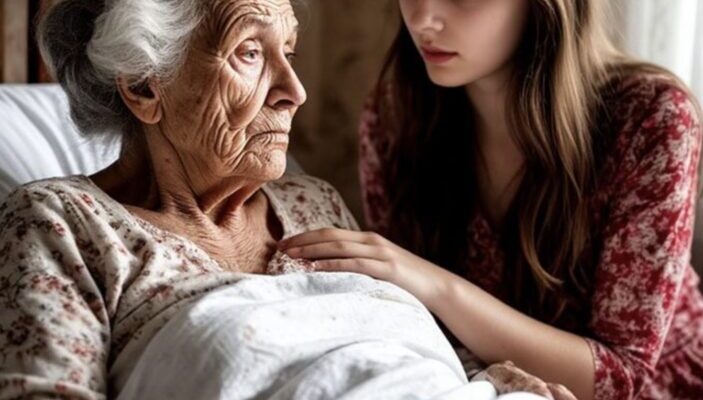
“I was punishing you for my daughter. Instead of taking care of me herself, she chose to hire strangers.
She only comes once a month — just to hand over money.
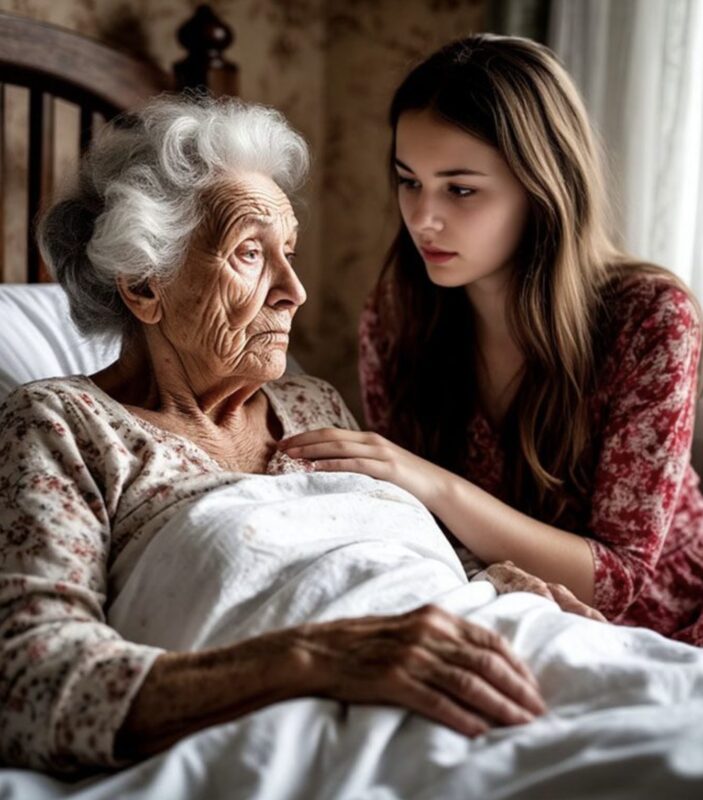
She cut my grandchildren off from their grandmother as if I were some shameful burden to be hidden away.
I hoped that if you left, she would finally reconcile with me…”
“Who is it again? A Moldovan? Oh Lord! Moldovans, Gypsies…
Do you want this woman to rob me?” — the old woman shouted when she saw me.
Yes, I had come to the city from Moldova.
I was twenty-seven, and my family was in serious trouble: my mother needed major surgery, and we were still paying off the mortgage.
So I packed up and left to earn money.
I gave myself a time limit — a year or a year and a half.
Then I planned to return to my normal life.
Following the advice of my employer — 60-year-old Alevtina Alexandrovna — I started working as a caregiver for her mother, 84-year-old Vera Ivanovna.
It turned out to be no easy task.
I helped her wash up, brushed her hair, did the laundry, cooked diet meals, bought groceries and medicine.
But the old woman remained cold, unfriendly, and often rude.
Every morning it became harder to get up and go to that job.
Lying in bed, I listened to Vera Ivanovna tossing and turning, shuffling in her slippers, coughing, and cursing “that lazy Moldovan girl.”
The job was not for the faint of heart.
On top of constant criticism and mockery, I barely got any sleep.
In the evenings, after the old woman went to bed, I cleaned the apartment, cooked ahead, or went to the night store — during the day I couldn’t leave her alone for even a minute.
Every day required a huge effort just to stay.
Only the thought of my family gave me the strength to continue.
But my patience finally ran out when, after six months, Vera Ivanovna accused me of stealing five thousand rubles.
I explained that I hadn’t taken anything — I wiped down the surfaces every day and would have noticed the bill.
“Exactly!” — she hissed. — “You clean so often on purpose, to steal whatever I forget to hide!”
I was stunned.
This woman had no intention of being fair.
A real scandal broke out.
She called her daughter, who came, then called the police.
After a search (especially thorough of my belongings), the money was found in her own purse.
The police left, Alevtina too, but no apology came from Vera Ivanovna.
She simply stayed silent, proud and arrogant.
That incident was the last straw.
My strength was gone.
“I’m leaving,” I announced and began packing my suitcase — clothes, documents, scattered around the room where I lived.
“You want to leave a good job in the city?” — she scoffed, standing in the doorway. — “What about your life in Moldova? You people are poor as it is.”
“We’ll manage,” I replied calmly. — “I’ll find some kind of work. I’ll be fine.”
“Then why did you even come here, if you’re afraid of difficulties?” — she asked, curling her lip.
“To earn money for my mother’s surgery and pay off the mortgage,” I blurted out, although I never would have shared that with her before.
My nerves had given way.
“But I don’t want to stay here anymore.
Even if they pay less somewhere else, no one will call me a thief or humiliate me.
Find yourself another helper.
Too bad for her…”
We looked at each other for a long time.
She was shorter than me, thin, pale, covered in wrinkles.
But the look in her blue eyes was enough to pierce even the most confident person.
But now I wasn’t afraid of her.
This was the end.
I was leaving.
I was about to return to packing my suitcase when I heard her unexpectedly quiet question:
“You endure all this just to save your mother?”
Her words struck me to the core.
I expected another jab or mocking comment, but Vera Ivanovna’s voice was different.
It no longer held contempt or arrogance — just surprise, almost confusion… and, it seemed to me, even regret.
“What’s so strange about that?” I answered. — “I’m her only daughter.
Although ‘save’ is an exaggeration.
She just has cataracts, her vision is poor.
But it’s treatable.
The operation is simple, about thirty minutes under anesthesia — and that’s it.”
“Why not do it for free?” she asked. — “Doesn’t your country have public healthcare?”
“Yes, of course,” I nodded. — “But the wait would be long.
And I don’t want my mom to give up the things she loves: reading, crosswords, books.
Living with poor vision is hard.
She worked her whole life, never took a break.
Now I want her to be comfortable, at least in retirement…”
I trailed off mid-sentence.
I noticed the old woman’s eyes fill with tears.
She lowered her head, but the trembling of her shoulders made it clear — she was crying.
Suddenly, I was overcome with a deep sense of pity.
The resentment that had built up for so long vanished without a trace.
Gently, I hugged her.
I was afraid a new outburst of irritation would start.
Vera Ivanovna tensed, as if to pull away, but then suddenly pressed herself against me completely.
I was shocked!
She sobbed uncontrollably.
“Forgive me,” she whispered after a long pause. — “I was unfair.
I don’t know what came over me…
I’m not really that mean…”
“It’s okay, it’s okay,” I stroked her gray hair.
I felt a little awkward with this new, so unexpectedly gentle woman.
I tried to lighten the mood:
“We just didn’t understand each other at first.
Our relationship didn’t work out, you could say…”
“No, that’s not it!” — she exclaimed, straightening and pulling away from my arms.
I was afraid another outburst was coming.
But Vera Ivanovna squeezed my hand tightly and, trembling a little, said:
“I have to confess…
I was punishing you for my daughter.
Alevtina prefers to hire caregivers instead of being with me.
She comes only once a month — to bring money.
She kept the grandchildren away, as if I were the plague, as if old age were something shameful and disgusting.
Something to be hidden.
Subconsciously, I hoped that if you gave up and left, Alevtina would finally take me in…”
So we cried together.
From that day, our relationship changed completely.
At first, we spoke cautiously, choosing our words.
Then we started sharing stories about our lives.
She told me how she raised her daughter alone, how she fought for her future.
I told her about my strange long-distance marriage: my husband worked construction in another city to pay off the apartment loan, and I was in this city.
We had no children yet, because we couldn’t afford it.
Though we really wanted them.
Over time, we became close.
When I told her my mother had successfully undergone surgery, Vera Ivanovna was truly happy.
She asked how much we still owed on the loan, and even gave me a bonus so I could visit my husband for a few days.
But that unexpected friendship didn’t last long.
Four months after our reconciliation, Vera Ivanovna passed away in her sleep.
Quietly, peacefully.
After she was taken away, I cleaned the apartment, gathered her things, and held back tears.
It felt like I had lost a loved one.
Suddenly, the doorbell rang.
A worried Alevtina stood there, accompanied by a middle-aged man in a business suit — he introduced himself as her mother’s lawyer.
I tensed up, expecting another accusation.
But I heard something completely different:
“I must inform you about Vera Ivanovna’s will.
You are to receive…” — and he named the amount.
It was exactly the sum I needed to pay off the mortgage!
“What tricks did you use to get my mother to leave you so much money?” — Alevtina spat bitterly.
I looked at her in confusion.
“Tricks? I’ll show you the trick!” — I smiled and suddenly hugged her tightly.
She shrieked in outrage, struggling, while I went to grab my phone — I had to call my husband immediately and tell him we were going home.