Only then did people finally open the doors…
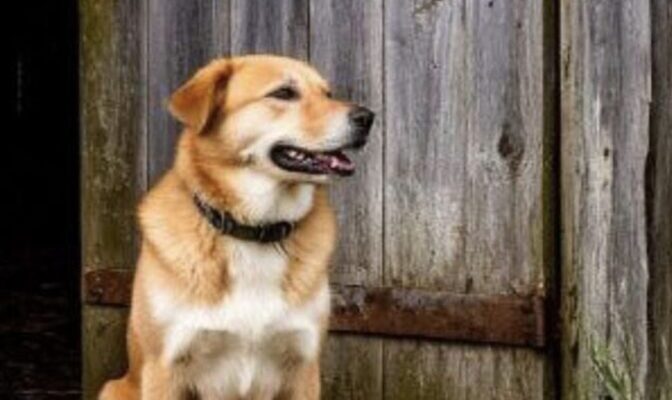
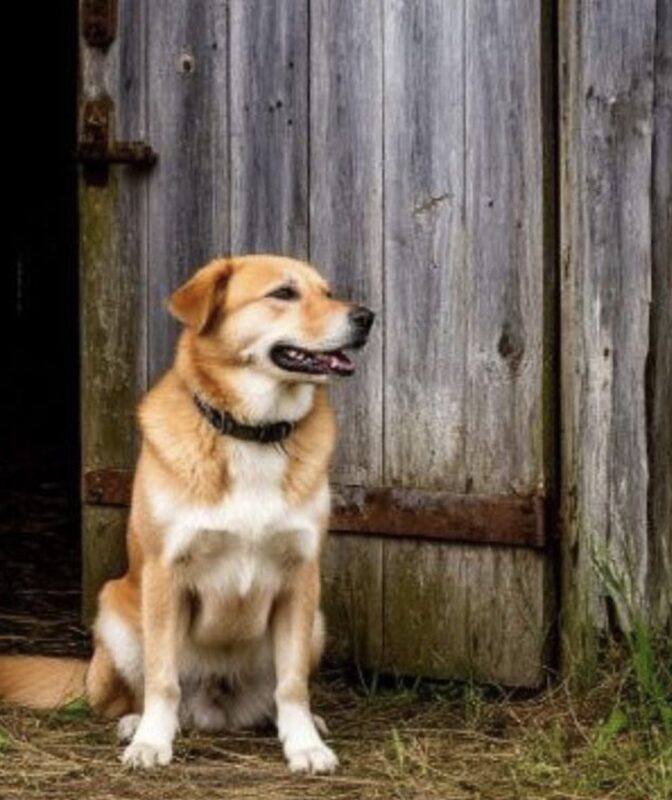
Ten years ago, an old dog appeared in Kolyutkino, then named Lyokha.
He belonged to the local policeman, but when the officer was transferred, the dog was left behind.
The mutt ran through the entire village, visited every yard, and eventually settled by an abandoned shed behind the late Granny Sergienko’s house.
Under a wide awning, where firewood was dried in the spring, he made himself a bed out of a torn sack and got a new name — Tokha.
No one paid him much attention: old, half-blind, with a broken tail and part of one ear missing.
There were plenty of dogs like that in the village.
Sometimes he was fed: Manka would toss him a crust of bread, Sanych the mechanic would throw him a bone.
And that was it.
In mid-August, something rare happened for the province — the bread kiosk at the bus stop closed, and people had to take a roundabout path to the button shop.
Tokha didn’t care: he dozed under the shed, only occasionally going to the pond to drink.
But on Thursday, almost at dawn, the school guard Pyotr Ivanovich noticed the dog no longer left the yard.
He lay sprawled at the shed doors, whining softly from time to time.
At noon, the Trofimov twins found him still there when they brought a chicken neck.
But Tokha only sniffed it and didn’t touch it.
— What’s wrong with him? — asked Vadik Trofimov.
— He’s just dumb, — Kolka shrugged. — Old already, doesn’t get anything.
By evening, the adults were talking.
— Heard? Tokha’s been sitting at the shed for three days, — said electrician Dyomin at the shop.
— Picked a spot to die, — concluded old man Teryokhin.
— Check on him, Pyotr Ivanovich, — the shopkeeper asked. — Maybe he’s sick?
— Just a mutt, — the guard grumbled. — Not my problem unless he starts stinking.
On the fourth morning, it turned out the dog still hadn’t left.
He sniffed at the crack in the door, lightly tapped it with the stub of his tail.
Then he lifted his head and howled so piercingly that retired nurse Lidiya Kapitonovna looked out from the house across the street.
— Uncle Petya, — she called across the road. — Check what’s wrong with the dog.
She’s howling like crazy.
The guard, putting down his newspaper, reluctantly walked toward the shed.
— Tokha, you gone deaf? — he called gruffly. — You can’t sit here, fleas’ll scatter.
The dog didn’t move, just pressed himself harder against the door.
— Looks like it’s the end for him, — muttered Pyotr Ivanovich. — I’ll open it — probably a corpse.
But the door gave way easily: the old latch snapped, as if it had been waiting for this moment.
The guard stepped inside and froze: a musty and oddly sweet smell wafted from the darkness.
— What the hell… — he whispered, turning on his flashlight.
In the middle of the shed, on a decaying mattress, sat a little girl about four years old.
Her cheeks were sunken, her eyes huge, and her hands clutched a kitten.
Crumbs were scattered on the floor, with flies circling them.
Next to the girl was a woman slumped to one side.
She was either asleep or…
— Mommy’s tired… — the little one whispered, raising her fist. — Quiet, or you’ll wake her…
The guard was stunned.
— Oh my God…
He ran into the yard:
— Lidiya Kapitonovna! Call an ambulance! People!
Within a minute, neighbors gathered at the shed.
Lidiya Kapitonovna examined the woman and began to cry:
— Too late. Been dead three or four hours…
The girl was silent.
Her name was Katya, and she only whispered something to the kitten.
Tokha lay with his head on her leg, as if protecting her.
By the time the ambulance, investigators, and the local policeman arrived, the story had started to come together.
The woman was from a neighboring village and had tried to escape from her partner: “He threatened,” “Started drinking.”
They crossed the field at night and decided to hide in the shed until dawn.
The woman’s heart gave out — judging by the empty pill package in her bag, her health problems had been long-standing.
The girl woke up alone in the morning.
— Did you cry? — asked the officer.
— I walked around, — Katya nodded. — Then the dog came. I was scared, and he sat next to me.
— And did you eat?
— He… went somewhere. I didn’t see…
Neighbor Semenyuta gasped quietly: there really were gnawed buns lying in the yard.
So the old dog had gathered bread from garbage bins, scratched at the shop doors, pushed crumbs through the gap, while the girl grabbed what she could to stay on her feet.
— The dog fed her? — someone said in surprise.
— Yes, — confirmed the paramedic, wrapping Katya in a blanket. — He deserves a thank you.
The story spread through Kolyutkino like wildfire: “Our Tokha — the provider,” “Old, but so smart.”
A line formed at the shop of people wanting to give him a bone.
But the dog wouldn’t leave the stretcher with Katya, who weighed only five kilograms: he escorted her to the vehicle, scratching with his paws.
Katya was taken to the district hospital for examination.
They only convinced the dog to stay after the nurses agreed: “Fine, old man, you can sleep under the windows.”
All evening, residents brought him food: porridge, milk, cold cuts.
But Tokha ate little, mostly waited.
Three days later, the head of administration, along with a TV crew, showed the report: “Stray saves child.”
On screen, Tokha looked serious — one eye cloudy, but his tail still wagging.
Katya, in the hospital room, held the kitten in her palms and smiled at the camera.
They offered him a medal — “Brave Heart” — and a new name, Titan.
But the villagers knew: he was Tokha, what did he need titles for?
What mattered more: the school announced a fundraiser for the girl’s treatment.
After the segment, they promised to reopen the bread kiosk by autumn, so people could shop easily, and the dog would have a job — to guard, not wander.
— See, old man, — Pyotr Ivanovich petted him, — you’ve done more in three days than our whole council of deputies.
The dog yawned and rested his head on the guard’s boot.
Katya was discharged in mid-September: her heart was weak, but the prognosis was good.
Child services were deciding where to place the girl, while her father was in prison, and her mother… was quietly buried by two neighbors.
Her grandmother in Syzran was bedridden and couldn’t take her in.
A place was quickly found for the dog.
School principal Zoya Andreyevna announced:
— I’m taking Tokha in. He’ll be the school’s watch dog. This is a living lesson in kindness.
They built him a kennel at the entrance.
Each class took turns bringing him breakfast: the younger kids — milk, the older ones — meat scraps, the gym teacher — vitamins.
Katya lived in the school’s boarding facility but spent her days by the kennel:
— Tokha, are you my friend?
The dog lifted his head — one eye saw little, but the other sparkled.
He sniffed the girl’s pockets — there was always something to nibble on.
A year later, the village organized a fair called “Rescuer’s Day.”
Schoolchildren sang on stage, and the main guest was the dog in a red ribbon, sitting beside Katya and patiently listening.
The local officer read out the diploma:
— “For loyalty and saving a human life, the dog Tokha is awarded.”
The crowd applauded.
Tokha didn’t understand the noise, but he felt Katya’s hand on his neck.
That was enough.
— Thank you, friend, — the girl whispered. — I was really scared that day.
The dog snorted softly and breathed warm air onto her hand.
The noise faded, the music quieted, and this old dog — without pedigree, without medals — had already taken his place in the schoolbook as the first lesson: sometimes the highest wisdom is simply to sit nearby and not leave.