Marci yelled at his mother, Ágnes, in his anger.
YOU’RE A BORING, OLD WOMAN!
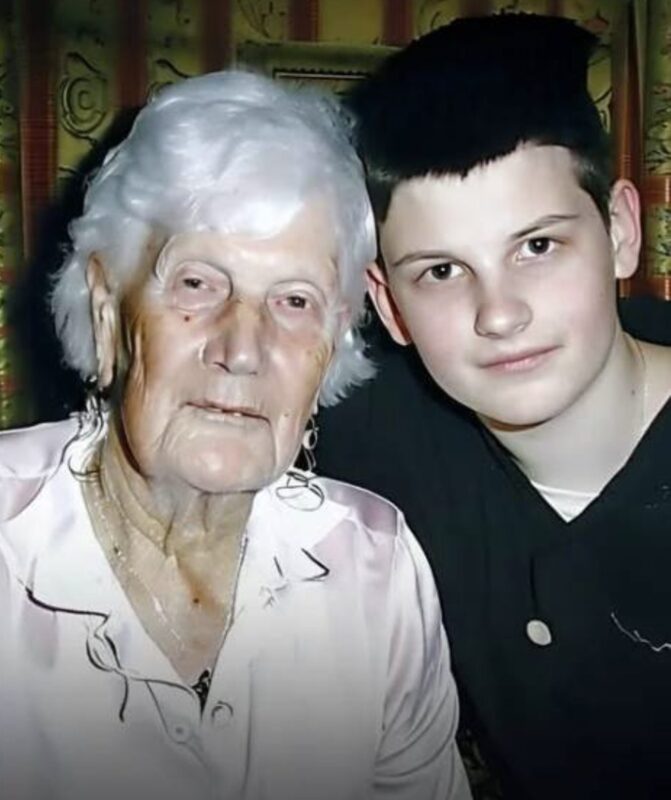
Everyone thinks you’re my grandmother.
On an unusually warm Saturday, in the little café on the outskirts of town called “Sunshine Corner,” the air was thick with the smell of freshly baked pastries, the aroma of strong coffee, and the lively chatter of teenagers.
Among them was thirteen-year-old Marci, who had fallen into a deep conversation with his best friends — Bence, Ákos, and Lilla.
Weekends were sacred to them — time to share secrets, laugh, and plan new school pranks before Monday’s routine dragged them back into reality.
Here, in this small café, Marci felt at home; here, he could just be “him,” not the guy labeled as the “old woman’s” son.
However, the thought that his mother, Ágnes, was much older than his friends’ parents often cast a shadow over Marci’s carefree days.
His mother’s silver streaks, the crow’s feet around her eyes when she smiled, and her slightly slower movements constantly stirred up feelings of shame in him.
He loved her — of course, he loved her! — but the peculiar sensitivity of adolescence weighed heavily on him, making it a burden that was hard to carry.
The ever-echoing, unspoken question, “Why did you give birth to me?” constantly reverberated in his mind.
On this same day, Ágnes, feeling her son growing more distant, decided to surprise him with something special.
She knew how much Marci loved superhero movies — the world of courage, adventure, and power, which was so different from their quiet little everyday life.
Although she herself was never enthusiastic about the flashy explosions and predictable plot twists, the desire to spend some quality time together was stronger than anything else.
“Maybe this will bring us closer again,” she thought hopefully as she dialed Marci’s number with slightly trembling fingers.
The phone rang for a long time, but there was no answer.
Ágnes sighed.
She knew where to find him.
With a tight heart but determined, she headed toward the café.
When Ágnes carefully stepped through the door of the tiny café, the noise almost knocked her over.
She scanned the crowd until she saw Marci — he was laughing at something Bence had said, his face full of joy.
She slowly, somewhat hesitantly, made her way toward them.
As the group noticed her, their laughter shifted in tone — it became mocking.
“Hey, Marci, your grandmother’s here to pick you up!
Don’t forget your cocoa!”
Ákos chimed in with a fake-concerned tone, and another round of chuckles swept across the table.
Marci’s face turned beet red.
Shame and anger surged within him.
He jumped up from his seat, his eyes flashing with fury.
“What are you doing here?
Can’t you see I’m with my friends?
You’re embarrassing me!” he hissed, trying to hold back his trembling voice.
Ágnes was taken aback by her son’s sharp words.
Her heart tightened, but she tried to maintain her dignity.
She gently reached out her hand toward him, her voice almost a whisper:
“Marci, darling, I was thinking… there’s a new superhero movie at the cinema.
I know how much you love those.
I wanted to spend some time with you.
I really miss you.”
Marci yanked his hand away as if it had been burned.
“No!
I don’t want to go anywhere with you!
I’m with my friends, don’t you get it?!
Go away before you embarrass me even more!” he snapped, almost growling from the mix of anger and humiliation.
Ágnes recoiled as if slapped.
Wordlessly, with tears welling up in her eyes, she turned and walked out of the café, leaving behind the awkward silence and Ákos’ smug look.
The walk home felt endless.
Every step Ágnes took was heavy, and when she entered the empty apartment, the silence hit her like an old, sad acquaintance.
To push away the sorrowful thoughts, she began cooking.
She made Marci’s favorite — spaghetti with meatballs — just like he loved when he was younger.
As she shaped the meatballs, memories began to flood in:
— little Marci, covered in tomato sauce, happily munching away;
— Marci reading him a bedtime story aloud, proudly;
— Marci, who hugged her tightly every night before falling asleep.
Where had that little boy gone?
Tears quietly fell into the pot as she stirred the sauce.
At 10:30 p.m., Marci finally returned home.
He was grumpy, quickly walking past the kitchen, and slammed the door to his room.
Ágnes gathered all her courage and knocked softly:
“Marci?
I made spaghetti with meatballs…
I saved you a portion on the table.
Would you like some?”
The door flew open, and Marci glared at her angrily:
“No!
I’m not hungry.
If I wanted something, I’d get it myself!” he snapped.
Ágnes stepped closer, her eyes filled with desperation:
“What happened, my boy?
Why are you acting like this?
Did I hurt you somehow?”
“Leave me alone!” he snarled at her.
“You’d better not want to hear what I really think!”
Ágnes didn’t give up.
“But I’m worried about you, Marci.
You matter to me!
I feel like I don’t even know my own son anymore.
What’s going on with you?”
Her voice trembled as she instinctively stepped forward to touch him.
That was the last straw.
Marci condensed all of his shame, anger, and teenage fury into one scream:
“What’s going on?
WHAT’S GOING ON IS YOU’RE A BORING, OLD WOMAN!
Everyone thinks you’re my grandmother!
I’M ASHAMED OF YOU!
I’m ashamed that you’re my mom!
WHY DID YOU GIVE BIRTH TO ME?
WHY DID I HAVE TO HAVE A MOM LIKE YOU?!”
At the last words, Ágnes almost audibly gasped.
She instinctively pressed her hand to her chest.
Her face turned pale, almost white.
Before she could say anything, Marci — frightened by his own anger and his mother’s pale face — grabbed his backpack and stormed out the door.
“Marci…” Ágnes whispered, but her voice was weak.
She tried to follow him with a few hesitant steps, but her legs gave way.
The last thing she saw was Marci jumping on his bike and disappearing into the night.
The world around her blurred.
She collapsed in front of their neighbor, Mrs. Kovács’ door.
\[ ]
There was a brief pause, then…
When Marci finally came home hours later, exhausted and tormented by guilt, he saw Mrs. Kovács waiting for him in front of the door.
Her face was stern and sad.
“Finally!
You’re home!” she said in a subdued voice.
“Your mother… Ágnes… she’s in the hospital.
Heart attack!
Because of you!”
Marci staggered back in shock.
“Heart attack?
Nonsense!
I didn’t ask her to give birth to me!
It’s not my fault she’s old!
Why should I feel guilty?!” he shot back defiantly.
Mrs. Kovács’ face twisted with a strange mix of anger and sorrow.
“How dare you say that?” she hissed.
“Fine.
Then listen to the truth.
But remember: you asked for it!”
She grabbed his jacket sleeve and pulled him into her apartment.
Inside, she took out a large, yellowed envelope from an old drawer.
“This is yours.
Your mother asked me to keep it… just in case you’d need it one day.
She didn’t want this, but you chose this path.
Read it,” she said, pressing it into his hand.
Marci opened the envelope with trembling fingers.
Inside was his birth certificate…
but his mother’s name wasn’t Ágnes.
There were adoption papers too, dated thirteen years ago, with Ágnes’ signature.
Then came the hospital papers:
* An urgent heart surgery that should have been performed on her when she was an infant.
* Bills from the hospital, astronomical amounts.
* A mortgage contract – Ágnes mortgaged their only home to pay for the surgery.
And in the end, an old photograph:
a much younger, but still somewhat older woman, holding a tiny baby in her arms, her face glowing with a radiant smile.
The world around Marci collapsed.
The woman he had been ashamed of, the woman he had hurt… not only was she not the “old” parent,
but SHE HAD CHOSEN to be his mother.
She had saved him.
She had sacrificed everything she had for him.
Kovácsné spoke gently but firmly:
* And now? Now that you know the truth? Is there a drop of gratitude left in you? A shred of respect?
Marci couldn’t speak.
His tears just kept falling.
He collapsed on the nearest chair, sobbing loudly.
A few minutes later, without a word, he rushed out of the apartment, jumped on his bike, and sped toward the hospital.
When Marci burst into the emergency room of the hospital, he was gasping, his heart pounding in his chest.
He desperately blurted out to the nurse at the reception:
* Please, I’m looking for my mother! Ágnes Kovács! They said she had a heart attack! Let me in, please!
The nurse hesitated for a moment, but seeing the boy’s trembling body and tear-streaked face, she finally nodded.
* Briefly, little one. She’s still very weak. You’ll only have a few minutes.
Marci almost crashed into the intensive care unit.
The sterile silence was broken only by the beeping of machines.
And there she was, Ágnes:
white, fragile, so many tubes and wires attached to her that Marci’s stomach twisted at the sight.
With trembling hands, he took his mother’s hand – it was surprisingly warm.
* Mom… please forgive me… – he whispered, his voice barely more than a breath. – I’m so sorry for what I said… for what I did… I was blind. Stupid. Cruel. I don’t deserve you.
He squeezed Ágnes’ hand as if his touch could pump life into her.
* Please… get better. I promise I’ll do everything differently. We’ll watch every superhero movie together. I’ll clean, cook, I’ll do anything. Just… please, stay with me!
His tears trickled down his face, quietly dripping onto the bedspread.
The recovery was long and difficult.
Two months of rehabilitation, painful physiotherapy, diet, and new habits to form.
But Marci was there every day.
After school, he rushed to the hospital, then later helped at home with everything:
* cooked healthy meals,
* did the shopping,
* accompanied Ágnes on walks,
* and in the evenings, they watched movies or simply talked.
The shame that once weighed on his heart disappeared.
In its place, something much stronger took over:
gratitude, respect, and boundless love.
He no longer saw the “old woman” he had been ashamed of.
Now he saw his mother. His hero.
As summer turned to autumn, their life settled into a calmer rhythm.
Every morning, Marci got up early and made breakfast:
* oatmeal with apples,
* or whole-wheat toast with avocado spread,
* and chamomile tea on the side.
In the afternoons, he helped with the housework or tried new recipes in the spirit of a healthy lifestyle.
In the evenings, if there was no studying, they sat together in front of an old movie – Marci even learned to appreciate the old classics he had once found boring.
Ágnes, meanwhile, came back to life:
* Color returned to her face,
* she started painting again,
* and her smile radiated warmth once more.
Her paintings – small watercolors, vibrant oil paintings – filled their home with color and life.
One afternoon, while they were walking in the park, they passed the “Sunshine Corner” café.
At the tables sat Ákos with a few old acquaintances.
As soon as they saw Marci and Ágnes, Ákos remarked, in a mocking tone:
* Look at that! Marci and his babysitter! Are they still holding hands?
In the past, these words would have hit like a punch to the stomach.
But now, Marci just stopped smiling and calmly replied:
* Yes, I’m with the most important person. My mom. Thanks, we’re doing fine. And you?
Ákos was taken aback.
His mocking smile disappeared.
Marci didn’t wait for a reply, he simply continued walking with Ágnes.
When they were far enough away, Ágnes whispered softly:
* I’m proud of you, sweetheart.
Marci just squeezed his mother’s hand.
* I don’t care what others think, Mom. What matters is that we’re together. And that I love you.
One evening, as they were packing away new watercolor paints, Marci hesitated before speaking:
* Mom… since I found out… that you adopted me… sometimes I wonder. You know\… who my biological parents were? Why did they give me up for adoption?
Ágnes put down her brush, and warmly squeezed his hand.
* Marci, I don’t know much, unfortunately. It was a closed adoption. But what they said was that your mother was very young. She couldn’t care for you. And with the greatest love, she gave you up for adoption, so you’d have a chance at a better life.
* And if someday… later… I want to know who they were? – Marci asked shyly.
Ágnes smiled and nodded.
* Then I’ll be right beside you. I’ll support you every step of the way. But never forget: blood doesn’t always make a family. Love is what truly matters. And I’ll always be your mom.
Marci couldn’t hold back his tears.
He hugged Ágnes, as if he never wanted to let go.
As time passed, Marci grew more mature.
He kept his friendship with Benci, made new friends, but the old, mocking crowd was now in the past.
He excelled at school, especially in biology and literature.
One day, in school, their teacher announced a project:
* “Make a family tree and tell the story of your family!”
In the past, Marci would have crumbled under this task.
But not now.
That evening, he told Ágnes:
* Mom, I’m not going to do the usual family tree. Not a drawing. I’m going to tell our story. You, me. Our love. What you gave me.
Ágnes’ eyes filled with tears, but she just said:
* That’s the most beautiful gift you can give.
In his project, Marci included:
* the adoption papers,
* a copy of the old mortgage,
* a picture of little Marci and Ágnes,
* another picture of one of Ágnes’ paintings,
* and a drawing he made, of a hand holding a small heart.
When he presented their story in front of the class, a deep silence fell over the room.
Many listened with tearful eyes.
That day, Marci understood: his story was not one of shame.
It was one of strength.
And though their journey had been full of pain and difficulties, he and Ágnes had overcome every obstacle together.
Because true family is not bound by blood.
It’s bound by love.
Sacrifice.
And forgiveness.