
A sudden phone call shattered the morning silence, breaking the calm of the bedroom.
Marina forced herself to open her sticky eyes and reached out to the nightstand.
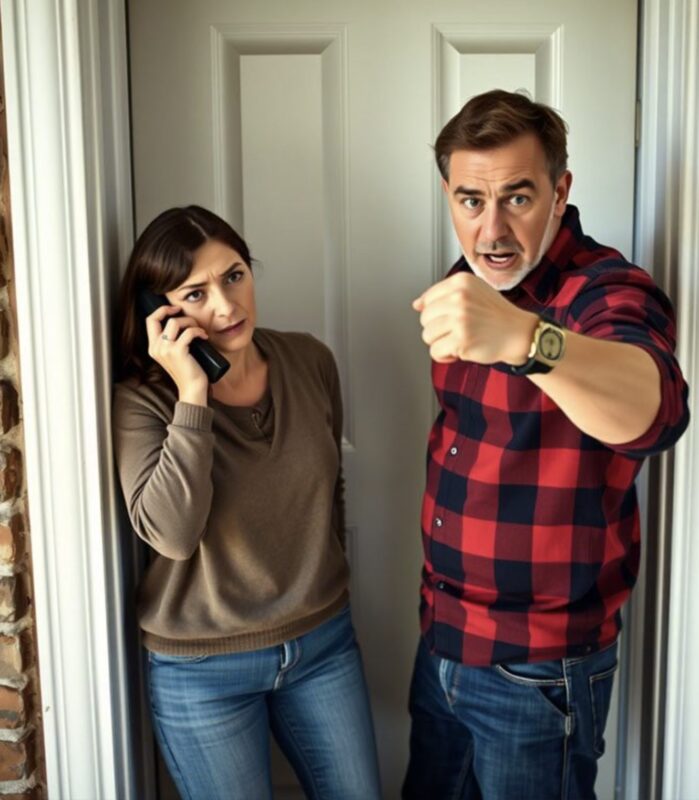
The screen showed the name “Aunt Zina.”
Her heart involuntarily clenched — their last conversation had been more than a year ago, during a scandalous scene at Grandma’s birthday.
“Hello,” she croaked, clearing the dryness from her throat.
“Marinochka! For heaven’s sake, don’t hang up!” Aunt Zina’s voice held an unusual softness.
“I know things have been tense between us… but Uncle Petya and I are planning to visit Novosibirsk next week. You don’t mind if we stay with you for a couple of days, do you?”
Marina sat up abruptly, shaking her head to wake herself fully.
Images from that long-ago conflict flashed before her eyes.
“When are you finally going to think about marriage?” Aunt Zina had boomed back then, completely unbothered by how loud she was.
“At your age, I had already raised two children! And you’re still alone, thinking only about your career. How selfish! Grandma’s never going to see any great-grandchildren because of you!”
“Aunt Zina, I…” Marina began, but stopped herself.
“I don’t live in Novosibirsk anymore. I moved.”
“What do you mean, moved? Where?”
Her aunt’s voice regained its usual commanding tone.
“To Krasnoyarsk. Three months ago.”
There was a long pause on the other end, filled with stunned silence.
“And you deliberately kept this from your own aunt?” she exclaimed. “Does your mother know?”
“Of course she knows,” Marina replied, feeling a wave of anxiety rising within her.
“I just needed to start fresh. A clean slate.”
“Oh, really?” Aunt Zina drawled. “Fine. But we’re coming anyway. Uncle Petya has always wanted to see Krasnoyarsk. And Dimka and Nastya, your cousins, want to see you too…”
“Aunt Zina, no!” Marina almost shouted. “My place is under renovation!”
“What renovation? We can sleep on the floor if we have to,” the aunt waved it off.
“Please, really, don’t,” Marina pleaded. “I’m too busy. And my apartment is really small…”
But her aunt wasn’t listening anymore, already saying something to Uncle Petya. The call cut off.
The next seven days turned into an endless trial for Marina.
She kept thinking about her aunt’s personality: when Zina made up her mind, nothing could stop her.
The phone wouldn’t stop ringing, but Marina methodically rejected every call.
Then the worst happened.
On Saturday morning, at 7 AM, a message came in:
“We’re standing outside your building. Come down and help with the bags.”
Marina froze. They must have gone to her old address in Novosibirsk.
Her fingers trembled as she typed:
“I told you — I’m in Krasnoyarsk!”
A reply came a minute later, followed by an angry call.
“Where are you, you irresponsible girl?! We’ve been waiting in front of your apartment for an hour!” her aunt screamed, clearly already at the front door.
A crashing sound came through the phone — apparently, Zina had really reached Marina’s old apartment and was now banging on the door.
“Open up immediately! I know you’re in there!” her demanding voice rang out through the speaker.
Suddenly, everything went quiet, and Marina heard a man’s unfamiliar voice:
“What kind of nonsense is this? Who’s Marina? I’ve been living here for the past six months!”
“What do you mean you live here?” Aunt Zina gasped in disbelief. “Where’s Marina?”
“Never heard of any Marina. And if you don’t stop making a scene, I’ll call the police,” the man snapped.
The call cut off. Marina instinctively turned off her phone and collapsed onto the bed.
She was shaking, her pulse pounding in her temples.
In her mind’s eye, she imagined the scene: Aunt Zina with huge suitcases standing at a stranger’s door, Uncle Petya trying to calm her down.
Dimka and Nastya likely standing off to the side, embarrassed by it all…
She didn’t turn her phone back on until the evening.
Thirty-six missed calls from Aunt Zina, seventeen from her mother, and dozens of messages in messengers.
She called her mom first.
“Well, you really put on a show,” her mother said tiredly. “Aunt Zina’s in hysterics, telling everyone you lied to them on purpose.”
“Mom, I told them not to come,” Marina replied quietly.
“You know how she… pressures me.”
Her mother sighed heavily.
“I understand. But still, they are family.”
“Family shouldn’t cause pain,” Marina said firmly.
“I don’t want to keep hearing how I’m ‘wrong’, how it’s time for me to get married, have children, forget my career… I’m different. And that’s okay.”
There was such a deep silence on the line that Marina could hear her mother’s breathing.
“You’re right,” her mother finally admitted. “I’ve wanted to tell you that for a long time… I’m sorry I didn’t protect you from your aunt’s attacks. It’s just… she’s my older sister, and I’ve always been used to obeying her. My whole life — she commands, I nod.”
Marina’s throat tightened.
“Thank you, Mom. You have no idea how much that means to me.”
“You know,” her mother’s voice trembled, “I once had dreams too… I wanted to apply to theater school. But Aunt Zina said that was ‘not serious’, that I needed to think about marriage. So I married your father at nineteen…”
“Do you regret it?”
— No, not at all! You appearing—that’s the most important thing that has happened in my life.
But sometimes I wonder: what if I had insisted back then?
Maybe I would have acted on stage and given birth to you.
You don’t necessarily have to choose between all of that.
Marina smiled through her tears:
— You know, Mom, it’s never too late to try.
The community theater always needs actors.
— Come on, at my age…
— But do you remember what you told me as a child? “Never say ‘too late,’ say ‘time to.’”
Krasnoyarsk greeted her with a mild autumn.
Her new job at an IT company completely absorbed her attention—she threw herself passionately into project work and signed up for web design courses.
In the evenings, she walked along the Yenisei embankment, discovering a new city that was gradually becoming her home.
At the office, people considered her strange: she didn’t join group smoke breaks, didn’t gossip by the coffee machine, didn’t complain about life.
Instead, she worked late for hours, studying new technologies or sat in the meeting room with headphones on, taking online courses.
— You’re exactly like a machine, — Svetlana from accounting once noticed. — Only work and nothing else. When will you decide to just live?
Marina just shrugged.
It was hard for her to explain that only now had she begun to feel truly alive—without the pressure of others’ demands.
At the start of the winter season, a new specialist arrived in their department—Gleb.
Tall, somewhat awkward, but with warm eyes and a fantastic sense of humor.
He never asked about her relationship status or mentioned the need to “settle down.”
One day he just left a donut on her desk:
— You missed lunch today. And the brain works worse without glucose.
Later, they met at a local supermarket near home—it turned out they lived in neighboring buildings. Gleb was carrying a huge bag of cat food.
— Three pets, — he admitted with slight awkwardness.
— I took them from a shelter, couldn’t choose just one.
And Marina, to her own surprise, told him everything: the story about Aunt Zina, moving to Krasnoyarsk, her fear of being herself.
They spent late into the night on a bench in the yard, freezing but filled with joy from their newfound closeness, from realizing they could speak freely and be heard.
Gradually their weekends became shared.
They walked around the snow-covered city, made funny breakfasts, watched old movies wrapped in a blanket.
Gleb taught her to snowboard, and she taught him graphic design.
Both learned the most important thing—how to trust each other.
In spring, they went to meet Gleb’s parents.
Marina was apprehensive—past experience had taught her to fear others’ judgments.
However, Gleb’s mother simply hugged her and said:
— You are so charming. And your eyes are so wise. Gleb is incredibly lucky.
And in the evening, while they drank tea on the veranda, Gleb’s father asked:
— Why did you choose Krasnoyarsk?
Marina tensed, but he continued:
— I once dropped everything and moved too. It was the best decision of my life.
Sometimes you have to save yourself, right?
In summer, they got married. Without any grand celebrations—they just registered their relationship at the registry office and had a picnic on the bank of the Yenisei with close friends.
Her mother flew in from Novosibirsk and hugged them both:
— You are so happy…
Aunt Zina, of course, sent a series of outraged messages: “You didn’t even invite family to your own wedding! Have you lost all shame?
Was your dress at least white? Or did you, like nowadays, sign in jeans?”
Marina didn’t respond.
She was indeed wearing her favorite jeans with original embroidery she had done herself, a white blouse, and a wreath of wildflowers. And it seemed perfect to her.
Her mother stayed in Krasnoyarsk for a week.
One evening, sitting on the balcony of Marina and Gleb’s apartment, she suddenly declared:
— I signed up for a theater studio.
— What?! — Marina almost spilled her tea in surprise.
— Yes, so far only stage speech classes. But you know… it feels like wings are starting to grow.
They fell silent, watching the sunset over the Yenisei.
— What about Aunt Zina? — Marina asked.
— I didn’t tell her anything, — Mom winked with a mysterious smile. — I’m learning to be free, like you.
In autumn, Marina was promoted—she became the art director at the company.
Now she had her own team, her own projects, her own successes and failures.
She learned to say “no” where necessary and say “yes” where her heart demanded it.
Gleb always supported her decisions. When doubts overwhelmed her, he just hugged her and said:
— You’ll manage. You’re incredibly strong.
And she really did.
In December, a message came from Nastya, her cousin: “You know, you’re right to have left.
I want to find my own path too. Mom is furious—she insists that decent girls don’t choose directing.
But I don’t want to be just ‘decent’ anymore. I want to be happy.”
Marina smiled and replied: “Come visit. Just keep it a secret from Auntie—you’ll decide everything yourself. By the way, I have a free couch.”
Nastya arrived a week later—with a backpack full of fears and hopes. They talked late into the night—about dreams, the right to be yourself, about family being not only those who raised you but those who help you grow.
— You know, — Nastya confessed before sleep, — I used to think you were selfish. But now I understand—you’re just brave.
In spring, Marina found out she was pregnant. It happened naturally, without firm plans. The time had just come.
Aunt Zina somehow found out—apparently through mutual acquaintances. She called after two years of silence:
— Finally started living right! — she declared triumphantly. — And I told you—the main purpose of a woman…
Marina gently interrupted her:
— Aunt Zina, I didn’t start “living right.” I’m just living. And I will give birth not because it’s expected, but because that’s what I want. I will raise the child as I see fit.
— How dare you… — Aunt started.
— I dare, — Marina replied firmly. — And you know what? I’m grateful to you.
— For what? — Aunt was taken aback.
— For showing me who not to be.
Every reproach made me stronger. Every judgment reinforced my confidence in my choice.
Thank you for that.
And she hung up.
Now in the evenings, she and Gleb sit on the balcony, sipping tea and making plans.
About travels, the future child’s room, how they will teach the child to be themselves.
Her mother visits every month—she acts in the community theater and literally glows with joy.
Nastya enrolled in the directing faculty and makes short films.
And Aunt Zina… Well, everyone has their own fate.
Sometimes you have to go far away to understand who you really are.
Sometimes you need to break old ties to create new, true ones.
And sometimes you just have to allow yourself to be yourself, even if someone doesn’t like it.
Marina often remembers the girl who left her hometown two years ago, avoiding others’ expectations.
How scared and lost she was.
If she could speak to her from the future, she would say: “Hold on, little one.
Everything will be fine. Better than you can imagine.”
And then she strokes her already noticeably rounded belly and whispers:
— And you, little one, no one will ever force you to be ‘proper.’ I promise.