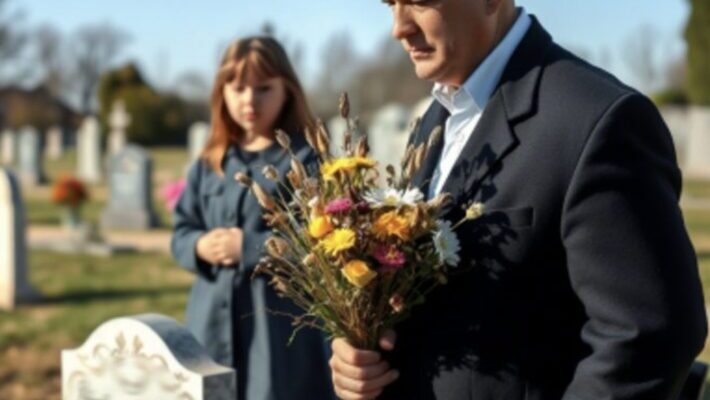
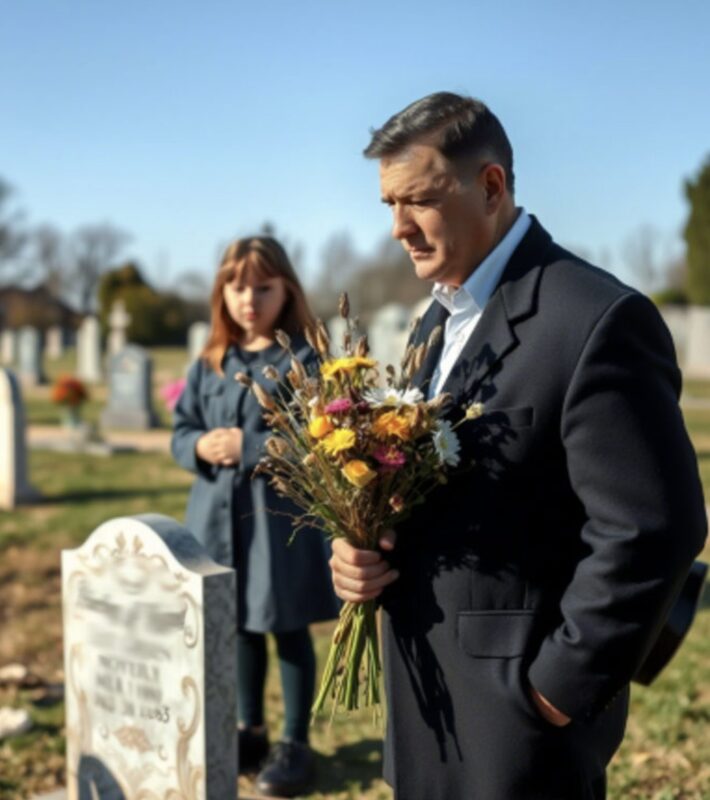
Matvey stopped the car at the cemetery gates and took a deep breath. My God, how many times had he planned to come here?
How many times had he postponed it “for later”?
When his mother was alive—he never had time.
After her death—it felt like there was no place left for the past.
And yet it had long been time to wake up. To realize that the world he had carefully built around himself was just a facade.
Not a single word, not a single gesture had any real foundation.
Ironically, he was even grateful to Natasha—his now ex-wife—for tearing down that fragile house of cards.
Just like that—bam!—and everything collapsed. That seemingly perfect family life, those “real” friendships…
But in reality—his wife, his best friend, and all those others who had known and stayed silent.
It wasn’t just a collapse. It was a blow Matvey still hadn’t recovered from.
Right after the divorce, he returned to his hometown. Eight years had passed since he buried his mother.
Eight years! And not once had he found the time to visit her grave.
Only now, with nothing good left in life, he realized a simple truth: his mother had been the only person who would never have betrayed him.
He married late—he was thirty-three, and Natasha was just twenty-five.
He had been proud of her, like a trophy. She was beautiful, elegant, “refined”—or so he thought.
Now he remembered her face twisted with rage, the words she threw at him: how she had hated him throughout their short marriage, how every night with him had been torture.
He still couldn’t understand how he had been so blind.
She cried, begged for forgiveness, said she felt lonely…
But the moment he said “divorce,” the mask fell. That was the real her.
Matvey got out of the car, taking a large bouquet of flowers from the back seat.
He walked slowly, eyes on the ground. The path was probably overgrown.
He hadn’t even come when the gravestone was installed—he did it all online, remotely.
Like a symbol of his whole life: always from afar, always unreal.
The fence was clean. So was the gravestone. The flowers were fresh, the soil neatly loosened.
Someone had been taking care of the grave. Probably one of his mother’s old friends.
Although… clearly her son hadn’t bothered.
He opened the gate and whispered,
— Hello, Mom…
His throat tightened, his eyes burned. Matvey didn’t expect to cry.
He—a businessman, cold, calculating, always composed.
But now he sobbed like a child. He didn’t try to stop the tears.
They were freeing, washing away everything connected to Natasha, the betrayal, the pain.
As if his mother were truly there, stroking his hair and whispering, “It’s all right, son… Everything will be okay.”
He sat for a long time. Silently. But in his mind, he was talking.
Remembering childhood: how he’d fall and scrape his knees, and his mother would dab them with iodine and say, “It’ll heal, won’t leave a mark.”
And it did heal.
With time. And each time, the pain became easier.
And his mom always added, “You can get used to anything—except betrayal.”
Now he understood every word. Back then, they just seemed like gentle phrases, but they were wisdom.
Paying the neighbor to watch the house wasn’t a problem—but how long could the house stay locked up?
He smiled, remembering how he had met the neighbor. He had been feeling down, broken.
And her daughter—Nina—had welcomed him so warmly… They talked, and things just flowed naturally.
He left early in the morning, leaving a note about where to put the keys. From her perspective, maybe he had acted heartlessly.
But he had never made any promises. It had all been mutual.
She had just divorced her tyrant husband and shared how hard it had been.
They were both lonely. So they came together—for a time.
— Mister, will you help me?
Matvey turned sharply. In front of him stood a little girl of about seven or eight, holding an empty bucket.
— I need to get water to water the flowers.
My mom and I just planted them, but today she’s sick.
It’s so hot outside—they’ll die! But the bucket’s too heavy.
I can’t carry it myself. Just don’t tell my mom I came here alone.
If I carry small amounts, she’ll still notice I was gone.
Matvey smiled.
— Of course. Show me where to go.
The girl ran ahead. Chatty, lively.
In five minutes, he learned almost everything: how her mom didn’t take advice and drank cold water, how she got sick, how they had come to her grandma’s grave a year ago, and how Grandma would have scolded her.
She also had finished her first school year and was determined to get only top grades—she even wanted to graduate with a gold medal!
With every word, Matvey felt lighter. Children were truly miracles.
He thought how much he wanted a real family: a wife who loved him, a child who waited for him at home.
His Natasha had been like a fancy doll—beautiful, but soulless. They never even discussed children.
According to her, “Only a fool would ruin her figure for a screaming lump.”
They had lived together for five years. And now he realized—he had not a single warm memory of that marriage.
He set down the bucket, and the girl carefully began watering the flowers.
Matvey looked at the gravestone and froze. On the photo—it was the neighbor.
Nina’s mother. The little girl’s grandmother.
— Zinaida Petrovna was your grandmother?
— Yes! Did you know her? Though why am I asking—you were at Grandma Zoe’s grave!
Matvey turned his gaze to the girl.
— So… you and your mom live here?
— Well yeah! I told you—Mom doesn’t let me come to the cemetery alone.
Matvey stared at the child, confused. So Nina had returned, and she had a daughter.
And he didn’t even know… Wait. He didn’t even know how old Masha was.
Maybe the child had come later?
The girl quickly said goodbye and ran off, reminding him not to make her mom worry.
Matvey returned to his mother’s grave, sat down, and thought. Something had shifted inside.
Nina must be taking care of the house herself now.
And he’d been paying her, thinking it was her mother. But in the end, who he paid didn’t matter.
Then he drove to the house. His heart tightened. Everything looked the same—as if his mother would appear on the porch any minute, wipe her tears on her apron, and hug him.
He sat in the car for a long time. His mother didn’t appear.
But in the yard was a surprise: everything neat, beautiful, flowers planted.
Nina really had cared for the house. He had to thank her properly.
Inside the house was also tidy and cozy, like someone had just stepped out and would be right back.
Matvey sat at the table for a while, but didn’t linger—he needed to settle things with the neighbor first, then rest.
Masha opened the door.
— Oh, it’s you! — she whispered, putting a finger to her lips.
— Just don’t tell Mom we met at the cemetery!
Matvey zipped his lips, and the girl giggled.
— Come in!
— Mom, Uncle Matvey is here! — Masha yelled deeper into the house.
Nina appeared in the hallway and froze, startled.
— It’s you…?
Matvey smiled.
— Hi.
He looked around—no sign of a husband.
— Nina, I’m sorry… I didn’t tell you I was coming.
Work in the city is bad, so I’ve been looking after the house myself.
— My condolences, Nina. And thank you for taking care of the house. I walked in—it felt like Mom had just stepped out.
— Are you staying long?
— A few days.
— Planning to sell?
Matvey shrugged.
— Haven’t thought about it yet. Here—this is for you, for all your help. A kind of bonus.
He placed a thick envelope on the table.
— Thank you, Uncle Matvey! — Masha beamed. — Mom really wants a new dress, and I want a bike!
Matvey laughed. Ah, such a familiar spirit!
That evening, he realized he was sick. His temperature spiked.
He found his mom’s thermometer—fever was high.
Not knowing what to take, he texted the neighbor’s phone.
Only now did he know—it was Nina who replied.
“What do you take for a high fever?”
Ten minutes later, they were at his place.
— Oh God, why did you go inside? I infected you!
— Come on, you’re the sick one—why did you come?
— I’m fine, really!
Nina handed him pills, Masha made tea.
— You’ll burn yourself! — Nina worried.
— Who, Masha? Never! She’s a master of everything!
Matvey smiled. And suddenly, something clicked—like in childhood when his brain suddenly found the right answer to a hard puzzle.
— Nina…
She looked frightened.
— What?
— When was Masha born?
Nina slowly sat down.
— Why do you want to know?
— Nina!
She turned to her daughter.
— Masha, run to the store, get a couple of lemons. And something to drink.
— Okay, Mom!
Once the girl left, Nina spoke.
— Matvey, let’s make this clear: Masha has nothing to do with you. We don’t need anything. Just forget it.
— What do you mean, “forget it”? Is it true?
— Nina, do you realize what you’re saying? Why didn’t you tell me? Why hide it?
Matvey stood up.
— I chose to keep the baby. You had no part in it—so I didn’t tell you.
Didn’t think you’d ever come back. And definitely didn’t think it’d matter to you.
— You think I wouldn’t want to know I had a daughter?
Nina shrugged.
— I managed. As you see.
Matvey was silent. He was shaken. All those years he had lived a fake life.
And real happiness—it was here. In the face of a little girl and the woman he had always loved.
— Matvey? — Nina asked anxiously. — What will you do?
Please, don’t tell Masha. Leave—and forget. It’ll only hurt her. She’ll start waiting…
— No! That won’t happen.
— Please understand…
— I don’t even know what to do yet.
That night, he dreamed of his mother. She smiled, hugged Masha, and said she had always dreamed of a granddaughter like her.
Three days later, Matvey was leaving. Nina sat at the table, listening:
— I’ll handle my affairs and come back. In a week, maybe a bit more.
Not just for a visit. I want to bring you both back. I promise—if it doesn’t work out, I won’t say anything to Masha.
But I’ll always help. Nina… is there even the smallest chance? A chance at family, at happiness?
She wiped a tear and whispered:
— I don’t know…
He returned three weeks later. Not to his place—but to Nina’s.
In his hands—huge bags of gifts for Masha and her mom.
— Hello!
Nina was sewing by the window, heard his voice, and barely smiled.
— You came…
— I told you I would. And where’s…
Masha walked in:
— Hello, Uncle Matvey!
Nina stood.
— I’ve thought it all over. And… Masha, I want to introduce you to your real dad.
Matvey dropped the bags.
— Thank you…
They left a week later. Both houses were put up for sale—they decided to start a new life.
Masha still mixed up her words, sometimes calling him “dad,” sometimes “Uncle Matvey.”
And he just laughed, hugged them both, and believed that now everything would finally be exactly as it was meant to be.