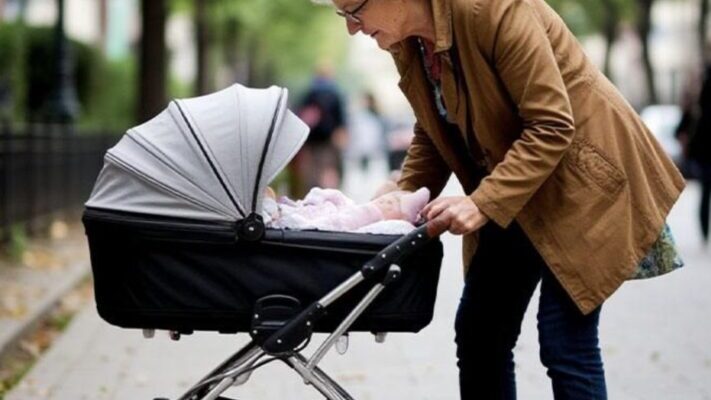
Ten years. Ten long, exhausting years full of hopes, tears, failures, and harsh trials passed for Ulyana and Evgeny Dmitriev before they heard the first cry of their son.
That sound was like a revelation for them — it filled the emptiness in their hearts, brought life to the walls of their modest apartment in an old five-story building, where before it had been too quiet, too empty, and too lonely.
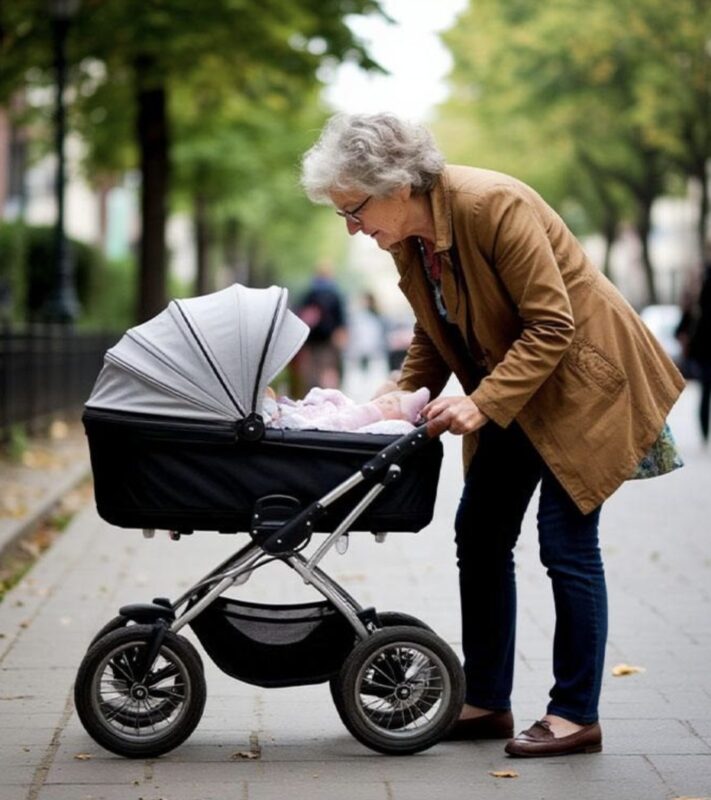
The room, which had seemed huge and foreign without a child, now breathed anew — with every breath, every squeak, every incoherent babble.
It was not just a child. It was a victory.
Their small but significant victory over pain, infertility, and time that seemed to give them no chance to become parents.
After being discharged from the maternity hospital, they felt like they were on cloud nine — as if the world around them had become brighter and the air tasted sweeter.
They were happy. But along with this happiness came anxiety: who would help them cope with this new life?
How to be the parents they were supposed to be?
It was then, as if sensing the moment, that Natalia Romanovna — Evgeny’s mother, a woman for whom “being present” always meant “taking control” — burst into their home.
“Well, show me my prince!” she exclaimed, barely crossing the threshold.
In her hands was a bag with baby things, and in her eyes the certainty that only she knew how to properly raise children. “Grandma has come to babysit!”
Ulyana, pale and exhausted after childbirth but glowing inside with happiness, gently but firmly blocked her way.
She knew what would follow — advice, remarks, criticism.
But now she needed to be with Alyosha. Only with him.
“Natalia Romanovna, thank you, of course, but… I need to do it myself.
Right now this is important. Please, give us time to settle in.”
Displeasure flashed across the mother-in-law’s face. Not that she expected anything else — from the start, the daughter-in-law seemed too sensitive, too emotional.
But such blatant distancing? That was disrespect.
“What do you mean ‘yourself’?” Natalia Romanovna snorted sarcastically.
“You’re shaking all over, Ulya. You have no strength. I’m experienced — I raised Evgeny!
Give me the grandson, I’ll rock him, sing him a song…”
“No,” Ulyana’s voice trembled but remained firm.
A mother’s intuition, sharpened by years of waiting, screamed to her: “Only you.
Only you can be near.” She instinctively shielded the crib where her son was sleeping.
Evgeny, standing a little aside, watched the scene with the look of someone wanting to run away.
He understood his wife but also remembered how his mother always made all the decisions herself, and opposing her was nearly impossible.
“Mom, let Ulya get used to it. She just arrived. Once she’s stronger, then… Here, the diapers, maybe you can help sort them?”
Natalia Romanovna snorted contemptuously, glanced at her husband with confusion, and turned away. Resentment hung in the air like a dense fog.
She did help — washing dishes, hanging laundry, cooking broth.
But she did it coldly, dryly, with the look of a victim who is unappreciated.
Every glance she cast toward Alyosha triggered an anxiety attack in Ulyana.
Her maternal instinct was sharp as a blade. “This is my child. Only mine.”
A month passed. During that time, Ulyana grew a little stronger, though sleepless nights and constant tension did not leave her.
She decided to visit the doctor, Marina Sergeyevna — the woman who had restored her hope when other doctors just shook their heads. Ulyana wanted to thank her personally.
She gathered a bouquet of white roses, a box of chocolates, checked how Alyosha was dressed, and told her husband:
“I’ll go quickly. I’ll take Alyosha with me — let him get some fresh air.”
Natalia Romanovna, drinking tea in the kitchen, immediately intervened:
“Why drag the baby out in the cold? Leave him. I’ll watch him.”
“No, no!” Ulyana answered sharply, already pulling on her hat. “We’re together. I won’t be long.”
She couldn’t explain it logically — why today she needed to be with Alyosha, why even a minute without him felt dangerous.
But she felt: he needed to be near. She felt this day would be important.
The clinic was only ten minutes away on foot.
The bright winter sun blinded her eyes; the snow sparkled like diamonds.
Ulyana wheeled the stroller to the entrance. Alyosha was peacefully asleep, wrapped in a down blanket.
His face was so calm that Ulyana’s heart overflowed with gratitude.
She hesitated: should she bring the stroller inside or leave it here?
Inside it was stuffy, crowded, and there were queues. She wouldn’t stay long — literally five minutes.
She straightened the blanket, kissed her son’s forehead, and whispered:
“Alyosha, darling, mommy will be right back. You’re sleeping, little angel…”
She left the stroller by the entrance, wedging a stone under the wheel so it wouldn’t roll away.
Taking the flowers and chocolates, she quickly went inside the clinic.
Marina Sergeyevna’s office was cozy, warm, smelling of herbs and coffee.
Ulyana thanked the doctor, told about the difficulties, the years of waiting, every step of the way.
Her eyes sparkled. She was happy.
Ten minutes later, she came out into the corridor, still smiling, and headed for the exit.
That smile froze when she saw the empty stroller in the spot where she had left it just minutes ago.
“Alyosha?!” a wild, painful cry burst from her chest, and people around stopped in their tracks.
“Where’s my son?! Where’s my child?!”
She dashed one way, then back, grabbed passersby by their sleeves, cried, begged for help.
An icy panic froze her throat. The world dimmed.
She fell to her knees in the middle of the sidewalk and sobbed, repeating:
“Stolen… Gone… Lost…”
Not feeling the cold, not hearing questions, she sat on the snow until someone helped her up.
Someone called the police. She was taken back to the clinic.
There she sank onto a bench, clenched her fists so hard her nails dug into her skin.
Her dark chestnut hair seemed to be graying before her eyes.
Her face grew gray, her eyes empty.
She did not cry. She was simply losing her mind.
And at that moment, the phone rang. The screen showed the name: Evgeny.
“Ulyana?” Her husband’s voice was strained and tense. “He… Alyosha… He’s home.”
“What?! How?! Who?! Where?!” she screamed, unable to believe her ears.
“Mom. Mom brought him. She says…” Evgeny stopped, swallowed. “…she wanted to teach you a lesson.
That you don’t let anyone near the child. She took him while you were at the clinic. Just brought him back.”
The silence on the line was deafening. Then came a low, guttural groan turning into a growl.
Ulyana dropped the phone.
She didn’t remember how she ran out of the clinic, how she ran across the city, how she burst into the building, how she flew up the stairs.
She was driven by rage, fear, pain — a mixture of feelings impossible to put into words.
When she burst into the apartment, the first person she saw was Natalia Romanovna.
She stood in the hallway holding peacefully sleeping Alyosha.
On the mother-in-law’s face was a mixture of self-justification and barely concealed triumph.
“Well, Ulyana,” she began, as if to say: “I was right.”
“Now you understand you can’t not trust your family like that? I just wanted…”
She didn’t finish.
Ulyana, like a wild animal, snatched her son from her mother-in-law’s arms and threw him into her husband’s.
“You’re crazy!” she screamed, her voice cracking into a shriek.
“You stole the child from the stroller?! Because of your sick pride?! Do you even realize what I went through?!”
Before Natalia Romanovna could say anything, Ulyana slapped her across the cheek.
Sharp. Loud.
The blow made the mother-in-law recoil, clutching her face with her hand.
“Get out!” Ulyana hissed, trembling with rage and fear. “Get out of my house!
And don’t let me see your feet here again! Forget our address!”
The mother-in-law looked at her with genuine horror.
She did not expect this. She did not think she had done anything wrong.
“Evgeny!” she called to her son, her voice trembling. “You see! She’s completely lost it!”
“Mom…” Evgeny’s voice was quiet and dead calm. “Leave. Please. Now. Leave.”
He didn’t look at her. He looked at his wife, at his son.
And he understood: his mother had crossed a line that could not be forgiven.
Natalia Romanovna silently threw on her coat and left.
She did not look up.
She did not say goodbye.
Only the closing door remained behind her.
“Ulya…” Evgeny began, stepping toward his wife.
“Don’t come near!” she recoiled as if from a stranger. “You… your mother… how could she… he could… he could…”
Her voice broke.
She began to cry again, then let out an unnatural screech that made the man’s ears ring.
But he did not judge her.
He knew she needed to release that pain, that rage, that fear.
After that day, the door to their home was closed forever to Natalia Romanovna.
A couple of times she came, called, tried to explain she wanted to “teach” her daughter-in-law to trust family.
But the door remained closed.
“What’s wrong, son?” she genuinely wondered on the phone.
“Your wife should apologize to me, but you’re blaming me! Whose side are you on?”
But Evgeny, who had always supported his mother before, now answered coldly and firmly:
“On my wife’s side. You had no right to behave like that. It’s cruel and inhuman.”
He hung up.
They never spoke again.
Wounded and offended, Natalia Romanovna blocked her son on all social media.
She never understood what she did wrong.
To her, it was a “lesson,” a “way to teach.”
But for Ulyana, it was the worst nightmare she ever lived through.