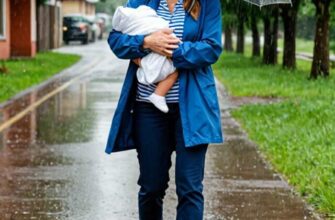
— Stop! — I shouted across the entire field, but the small figure kept slowly moving through the wheat.
August was scorching hot.
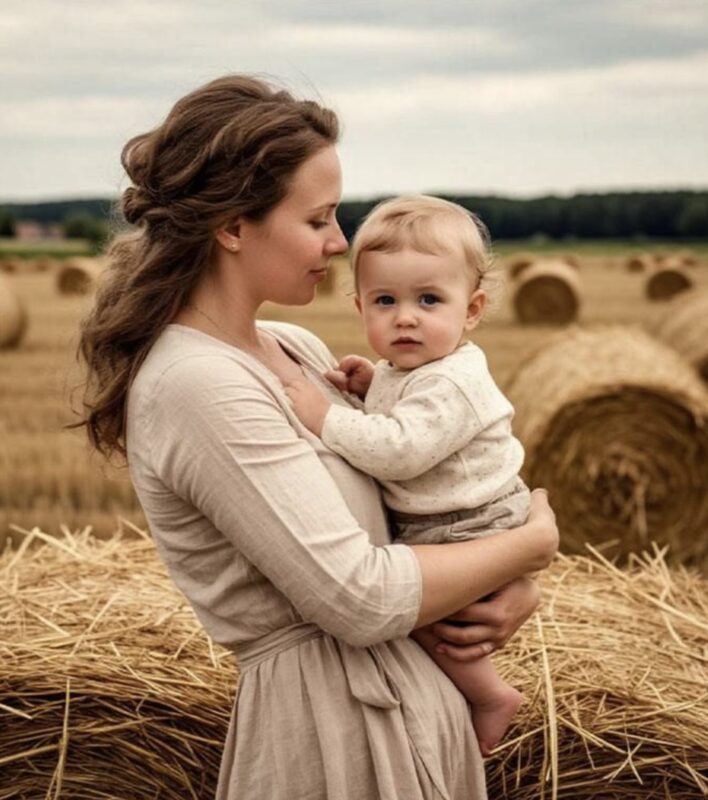
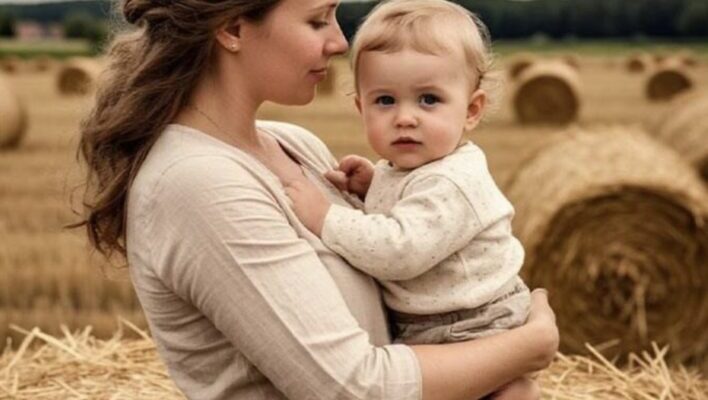
I was returning from the river, carrying a bucket of laundry, when I noticed her — a five-year-old girl in a tattered dress.
She walked strangely, as if in a dream.
— Hey, little one! — I put the bucket down at the edge of the field and ran to her.
The girl turned around. Her huge brown eyes looked right through me.
There was a dried scratch darkening her cheek.
— What’s your name? — I crouched down in front of her.
Silence. Only the wind rustled through the wheat around us.
— Where is your mother? — I asked softly.
She tilted her head slightly, then raised her thin arm and pointed into the distance.
— There’s no one there, dear. Come with me, you’ll warm up and eat.
Taking her icy hand — despite the heat, it was cold — I led her toward the house.
The girl walked obediently, occasionally looking back at the endless field.
Ivan was working in the garden. Seeing us, he straightened up:
— Masha, who is this?
— Found her in the field. She was alone. Doesn’t say a word.
He approached and sat down beside her:
— Hi. I’m Uncle Vanya. Want a carrot?
He pulled a peeled carrot from his pocket. The girl took it and carefully bit into it.
— We should probably notify the police, — he said quietly.
— First, let’s feed her and wash her. Look at her.
In the kitchen, I sat the child at the table, poured some milk, and put some bread in front of her.
She ate slowly, carefully, almost silently. Sometimes she froze, as if listening to something far away.
— Do you remember your name?
She shook her head.
— Where did you come from?
She pointed again somewhere into space.
— Maybe gypsies? — Ivan suggested. — A camp recently passed through here.
— Doesn’t look like it. More like a lost child.
I took her to the bathhouse, washed off the dirt, treated the wounds with iodine.
Under the layer of dust and sweat was fair skin and fine light hair.
I dressed her in my old shirt — it hung loosely, of course, but it was clean.
In the evening, the local officer Stepanich arrived. He examined the girl, recorded her description.
— Nobody’s reported missing in the area. I’ll check the neighboring districts. For now?
— She’ll stay with us, — I said firmly.
Ivan nodded.
— I’ll come by tomorrow.
That night the girl woke up frightened and ran to me. She hugged me tightly, trembling.
— Hush, hush, I’m here. No one will hurt you.
I stroked her head until she calmed down.
I lay down next to her on the folding bed in the room.
— Mom? — she suddenly whispered.
My heart froze.
— What is it, dear?
But the girl had already fallen asleep again.
A week passed. Stepanich came by every day — no news.
The girl still didn’t speak, only muttered something incomprehensible in her sleep in an unknown language.
— Maybe she’s a foreigner? — Ivan guessed during dinner.
— What foreigners in our backwoods?
The child sat nearby, finishing her potatoes. Over the week, her cheeks had flushed, and her gaze had brightened.
— Maybe we should give her a name? — my husband suggested. — It’ll be easier that way.
— What if she has a name? She might remember it.
— Let it be temporary.
I looked at the girl. She raised her eyes — brown, with warm golden flecks.
— Katya, — I said suddenly.
— She looks like my grandmother Katya as a child. Same eyes.
The girl smiled for the first time in all this time.
Autumn came early. We named her Katya — and she gradually settled in.
She helped around the house: fed the chickens, collected eggs.
She started speaking — first single words, then short phrases.
But about the past — not a sound.
— Mom, water, — she said one morning.
I froze with the kettle in my hand. Ivan even turned away to hide the gleam in his eyes.
— What did you say?
— Give me water… mom.
I hugged her tightly, unable to let go.
In October, a letter came from the district — nobody was looking for the girl.
They offered to send her to an orphanage.
— We won’t give her up, — Ivan said firmly. — We’ll arrange guardianship.
— And if the parents are found?
— We’ll deal with it. But she won’t go to an orphanage.
The bureaucratic process began. Certificates, checks, commissions.
They inspected the house, asked about income.
Katya hid behind my skirt when strangers were around, didn’t utter a word.
— The child is kind of strange, — a woman from social services noted.
— Maybe better to give her to specialists?
— She’s not strange, — I replied. — Just scared.
She needs a home, not specialists.
By New Year’s, the papers were ready. Katya officially became our ward.
— Now you’re ours, — said Ivan, picking her up. — Forever.
The girl hugged him around the neck and whispered:
— Dad…
In winter, something inexplicable happened.
Waking up at night, I saw Katya standing by the window, looking at the white field beyond the glass.
— Katyusha, what are you doing here?
— They’re gone, — she whispered. — Completely gone.
— Who’s gone, darling?
She turned, her face serious, almost adult in the moonlight.
— I don’t remember. But they won’t come back.
I held her close, took her away from the window, laid her down again. She never came to the window at night again.
In spring, Katya blossomed. She ran around the yard, laughed, hummed her songs.
She learned to read quickly, as if she had known letters for a long time.
She drew strange patterns — circles, curls, symbols we couldn’t understand.
— What is this? — I asked sometimes.
— It just happens, — she answered simply.
In May, my sister came from the city. Seeing Katya, she gasped:
— Masha, she looks just like you as a child! Like a real daughter!
She looked at Katya — and it was true. Same cheekbones, same eye shape. Only lighter hair.
— It’s fate, — said my sister.
— It doesn’t just happen. God brought you to each other.
In summer, exactly one year after I found her in the field, the girl woke and quietly said:
— Mom, I remembered.
My heart stopped.
— What did you remember?
— That I’ve always been yours. Just took a long time to find you.
I hugged her, unable to hold back tears. Ivan came in at that moment.
— What happened?
— Dad, — Katya smiled through tears, reaching out to him, — I remembered: I’m your daughter. Always was.
Years passed quickly. Katya grew into a smart, kind girl.
Top of her class at school, helper around the house, the soul of the village kids’ group.
At fourteen, she won the district math Olympiad.
— You have to go study in the city, — said Ivan. — University, a profession — everything’s ahead.
— What about you? — she worried.
— We’re not going anywhere. This is your home, and you’ll come back like your own.
That evening, the three of us sat on the porch. Katya between us, her head on my shoulder.
— Mom, tell me again how you found me.
I told the story for the hundredth time, but it was important to her.
She listened attentively, smiling.
— I found you in the field, five years old, and raised you as my own.
And now you call me Mom. And that’s the best thing we have, — I finished.
— You know, — Katya said thoughtfully, — sometimes I have the same dream.
I’m standing in white light, and a woman says, “Go, they’re waiting for you.” And she points to our field.
— Maybe you dreamed an angel, — Ivan suggested.
— Maybe an angel…
When Katya turned eighteen, she enrolled in medical school.
Ivan and I went to see her off — all three of us cried.
She came home for vacations — the house immediately filled with joy.
— Mom, I met a guy, — she confessed in her third year.
— His name is Seryozha. He’s a doctor too.
— Bring him over, we’ll meet him.
Seryozha turned out to be a good man — serious, hardworking. Ivan approved him immediately.
— A reliable guy, — he said later. — You can feel safe giving her to him.
The wedding was held in the village. Katya in white — simply stunning. She cried tears of happiness all day.
— Thank you for everything, — she whispered hugging us.
Two years later, they had a son — Vanechka, like his grandfather. Then a granddaughter, Mashenka, like her grandmother.
Katya and Seryozha worked at the district hospital but came to visit us every weekend.
The house was once again filled with children’s laughter and warm life.
One day, when Vanechka turned five — exactly how old Katya was when we found her — something strange happened.
We walked as a family and reached that very field.
Vanechka suddenly stopped and pointed into the distance:
— Mom, there’s someone standing there.
We looked — no one. Only wheat swayed in the wind.
— There’s no one, dear.
— There is! A woman in a white dress. She’s waving and saying “thank you.”
Katya paled, sat down next to him:
— What else is she doing?
— Just standing and smiling.
The boy saw nothing else, but from that day, something changed in Katya.
She became calmer, more confident, as if some invisible path had ended.
That evening, we sat on the porch. The grandchildren were asleep, Ivan and Seryozha were playing chess.
— Mom, — Katya said quietly, — I think I’m starting to remember.
— Remember what?
— Not everything, just a feeling. Like I was sent to you.
Sent to find a home. So you’d have a daughter, and I’d have a family.
— Nonsense, — I said, but my voice trembled.
— No, not nonsense. I’m yours. Not by blood, but by heart — your own.
I hugged her like back then, many years ago, when I first held the frightened little girl close.
— You’re ours. The dearest.
— And you know, mom… When Vanechka was born, I understood: the circle is closed.
The love you gave me, I pass on. And it will always be passed on.
We were silent, watching the sun slowly set behind the horizon.
That very field, that very place where our story began.
A story about a girl who came from nowhere and became the closest person.
A story that family isn’t always blood ties.
It’s love, care, years spent together.
— Time to go inside, — said Ivan. — It’s getting chilly.
We stood and went inside. Katya hugged both of us:
— I love you. Thank you for not giving me away then. Thank you for believing in me.
— We love you, daughter, — I replied.
— People can be family not by birth, but by heart.
And you — you’re our true miracle.
And that was pure truth.