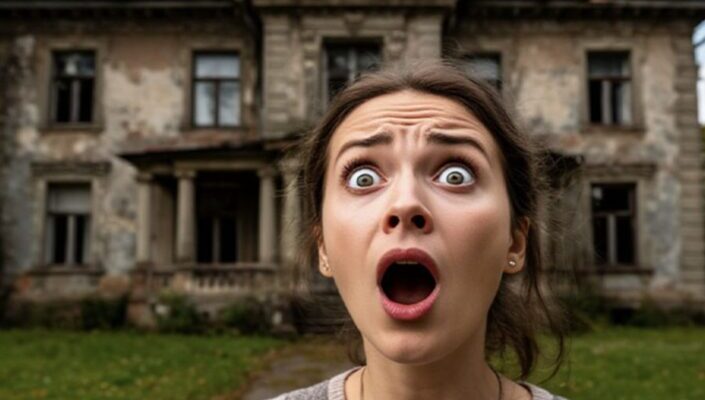
When the lawyer said, “You’re expected at Viktor Nikolaevich’s estate on Saturday at ten in the morning,” I nodded automatically.
His words sounded so ordinary, as if I had just scheduled a business meeting or a doctor’s appointment.
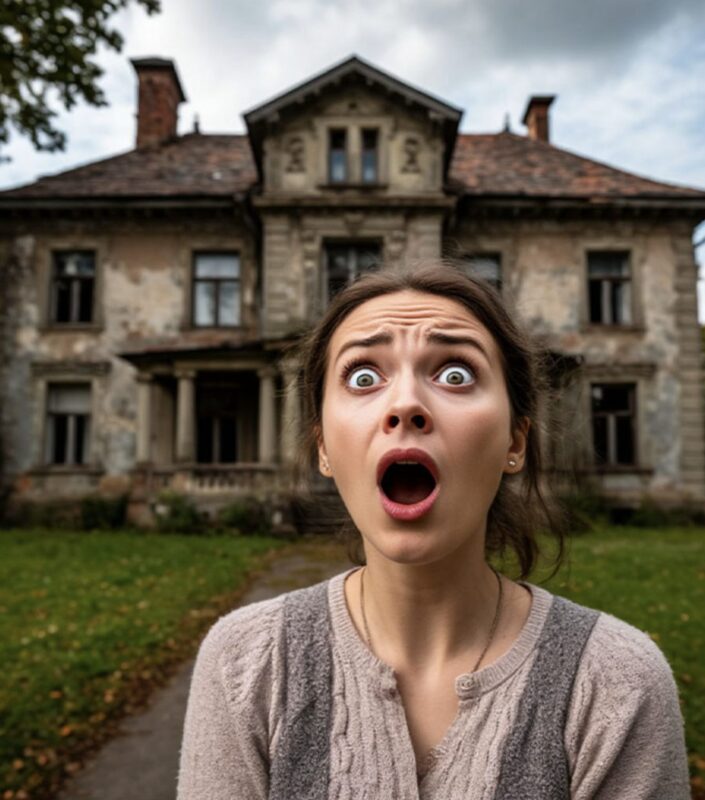
But inside, a quiet race of thoughts had already begun.
So… an old estate outside the city. A modernist mansion surrounded by tall fir trees.
An abandoned garden, a library with cracked bindings, oil paintings, a porcelain collection my uncle had spent half his life assembling…
And, if the rumors were true, an antique grand piano worth no less than half a million dollars.
All of this could now be mine. Or not mine?
By blood, I really was his only relative.
Viktor Nikolaevich had never had children; he had lived a long life alone, far from the noise of society.
A writer, a music lover, a connoisseur of fine wine, and a man with quirks, he had always been a mystery to me.
When my mother spoke of him, she often added, “a little strange,” but it was with him that I had the most fun as a child.
He told me fairy tales, played the piano, bought me ice cream even when my mother forbade it.
We were close — until the moment I grew up, until he withdrew into himself, and I began to see him only as a name in family conversations and as the rare birthday postcard.
In recent years, there had been almost nothing left between us.
Just a couple of calls a year and short letters written in neat handwriting, as if he were still writing for publication.
And now — a will. And an invitation to the mansion, like a ticket to the past that might bring real wealth in the present.
I arrived in the Moscow suburbs with a suitcase full of dreams and an empty heart.
I wore a dress more for the chilly weather than to look impressive.
The car stopped in front of the gate.
I approached the house, feeling each step echo in my chest with foreboding.
And there — the porch. Old stone slabs covered in moss. A bell above the door. And on the threshold — him.
“Hi. I’m Artyom,” the man said with a slight smile.
His voice was calm, confident, without unnecessary inflection.
“Sorry… who?” I asked again, not understanding right away.
“Viktor Nikolaevich’s son.”
“Whose?”
He stood leaning on the doorframe with one hand, holding a cup of cold tea in the other.
Tall, in his early thirties. Not a boy, not an old man.
Wearing a simple jacket, without pomp, without trying to seem important.
No bodyguards, no showy dignity. Just a man who, it seemed, had nothing to prove.
“Unofficial,” he added after a pause.
“We never made our relationship public.
He helped my mother when I was born, but he never formally acknowledged paternity.”
I froze. My head was spinning.
A storm was rising inside — a mix of anger, disbelief, and some silly sense of injustice — why not me?
Why didn’t I know this?
“But you… are you sure?” my voice trembled.
“We have DNA, the will, documents. Everything is legal.”
I felt suffocated. The air seemed to close in around me.
I had expected to hear that the house was mine, the books and paintings too, that I could sell everything and start a new life.
Instead — a son. Unknown, unexpected, like a blow out of nowhere.
“Why did no one know? Why didn’t I know?”
Artyom responded again with the same calmness:
“Maybe because he knew that, for some, money matters more than a person.”
Those words hit harder than I could have imagined.
They struck deep, like a reminder that I hadn’t come here for him at all.
Not for my uncle. Not for the truth. But for the inheritance.
During the reading of the will, silence filled the room.
The lawyer cleared his throat, flipping through papers, and finally said:
“The main part of the inheritance, including the mansion, collections, and property, goes to Artyom.
However, Viktor Nikolaevich left a special note…”
He took out an envelope — old, thick, with a seal that had long since faded but still held its shape.
“To my niece Maria, I leave what matters most: letters.
And books. Everything I wrote — about me, about you, about our family.
So that you would know who I really was.”
A chill gripped my chest. Not paintings, not the piano, not the vintage wines — letters.
Simple handwritten pages that couldn’t be sold, hung on a wall, or deposited in a bank.
I wanted to scream. To protest. To say that it was unfair.
That I didn’t come here for scraps of paper. That I deserved more. I wanted to leave.
Go back to Moscow and forget this mansion forever.
But for some reason, I stayed.
And you know what I did? I started reading those letters.
And in them, I didn’t just find the uncle I remembered from childhood.
There was a man — alive, anxious, lonely. Who feared being misunderstood.
Who loved silently, but deeply.
Who once met a young woman with a child, gave her shelter, work, and a chance to start a new life.
And although he never officially became a father, he became one in essence.
Artyom wasn’t lying. He was his son. By blood — perhaps.
But certainly — in spirit.
A month later, I returned to the mansion.
In my hands — a pie baked from my mother’s recipe.
In my mind — new thoughts. In my heart — a strange feeling, something like reconciliation.
“May I take the letters to the veranda?
It’s cozy there,” I said as I walked in.
Artyom smiled:
“Of course. Also… we found an old suitcase in the basement.
It had your childhood drawings. He kept them. All of them.”
I froze. The drawings. The ones where I had drawn him with a book in his hands, a cat on his lap, a piano behind him.
He kept them. At least that.
And in that moment, I realized one simple truth:
wealth is not porcelain or grand pianos.
Wealth is knowing you haven’t been forgotten.
That you remain in someone’s heart.
Even if you’ve forgotten yourself.