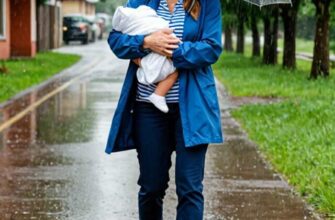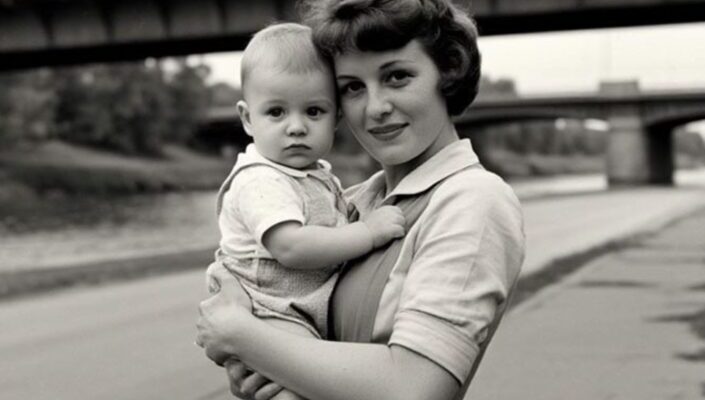
“What’s that?” I stopped in my tracks on the way to the station, listening closely.
A cry was coming from the left — quiet, but persistent. The February wind tickled my neck and tugged at the edge of my coat.
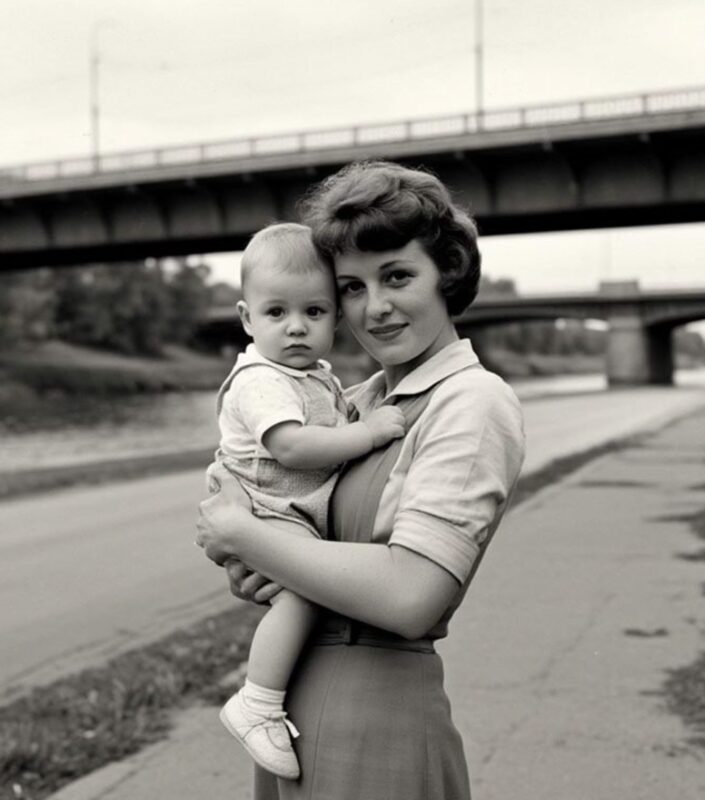
I turned toward the railway, where a dark, abandoned signalman’s hut stood out against the white snow.
The bundle was lying right by the tracks. An old, dirty blanket, with a tiny hand sticking out of it.
“Oh my God…” I lifted it from the ground.
A girl. About a year old, maybe a bit younger. Her lips were blue, but she was breathing.
She cried so faintly — almost no strength left.
I opened my coat, held the baby close, and ran back to the village — to the feldsher, Maria Petrovna.
“Zina, where did you get her?” she carefully took the child.
“Found her by the tracks. She was just lying in the snow.”
“So, she was abandoned. We need to report this to the police.”
“What police!” I pressed the girl to my chest again.
“She’ll freeze on the way there.”
Maria Petrovna sighed and pulled baby formula from the cupboard.
“That’ll do for now. But what are you going to do next?”
I looked at the tiny face.
She had stopped crying, burying her nose in my sweater.
“I’ll raise her. There’s no other choice.”
The neighbors whispered behind my back: “She lives alone, thirty-five already, time she got married, but instead she picks up other people’s children.”
I pretended not to hear.
Some acquaintances helped me with the paperwork.
I named her Alyona. This life that had just begun seemed so full of light to me.
The first few months I barely slept. Fevers, colic, teething.
I rocked her in my arms, singing the old lullabies my grandmother had taught me.
“Mama!” she said at ten months, reaching out her little arms to me.
I burst into tears. So many years alone, and suddenly — mama.
By the age of two she was running around the house, chasing the cat Vasya.
She grew up curious, sticking her nose everywhere.
“Galya, look how smart she is!” I bragged to the neighbor. “She knows all the letters in the book!”
“Really? At three?”
“Try her yourself!”
Galya pointed to the letters one by one — Alyonka named them all without a mistake.
Then she even told a fairy tale — about the hen Ryaba.
At five she started preschool in the neighboring village. I took her there by hitchhiking.
The teacher was amazed — she could read fluently, count to a hundred.
“Where did you get such a clever girl?”
“It took the whole village to raise her,” I laughed.
She started school with long braids down to her waist.
Every morning I braided her hair, picking ribbons to match her dress.
At the first parent-teacher meeting, the teacher came up to me:
“Zinaida Ivanovna, your daughter is exceptionally gifted.
Children like her are rare.”
My heart nearly jumped out of my chest with pride. My daughter. My Alyonushka.
The years flew by. Alyonka grew into a true beauty — tall, slender, eyes blue like a clear summer sky.
She won awards at district academic contests, and teachers always had kind words for her.
“Mama, I want to apply to medical school,” she told me in the tenth grade.
“That’s expensive, sweetheart. How will we manage the city, the dorm?”
“I’ll get in on a scholarship!” Her eyes sparkled. “You’ll see!”
And she did. I spent her graduation in tears — from joy and fear.
It was the first time she was going far away — to the regional center.
“Don’t cry, mama,” she hugged me at the station.
“I’ll come home every weekend.”
She was lying, of course. Her studies took over.
She came once a month, then even less. But she called every day.
“Mama, we had a tough anatomy exam! I passed with honors!”
“Well done, sweetheart. Are you eating properly?”
“Yes, mama. Don’t worry.”
In her third year, she fell in love — with Pasha, a classmate.
She brought him home — tall, serious. He shook my hand confidently, looked me straight in the eye.
“He’s a good one,” I approved. “Just don’t let your studies slip.”
“Mama!” Alyonka was annoyed. “I’ll graduate with honors!”
After university, she was offered a residency. She chose pediatrics — decided to help children.
“You once saved me,” she said on the phone. “Now I’ll save others.”
She came to the village less and less. Night shifts, exams.
I didn’t take offense — I understood. Youth, the city, a new life.
One evening, she called unexpectedly. Her voice sounded strange:
“Mama, can I come tomorrow? I need to talk.”
“Of course, sweetheart. What’s wrong?”
“I’ll tell you when I arrive.”
I barely slept that night. My heart sensed something was off.
Alyonka arrived pale, with sunken eyes.
She sat at the table, poured herself tea, but her hands shook so badly she could barely hold the cup.
“Mama, some people came to see me. They say… they’re my biological parents.”
The cup slipped from my hands and shattered on the floor.
“How did they find you?”
“Through some connections, mutual acquaintances… I’m not sure. The woman cried.
She said she was young, stupid. Her parents forced her to give me up.
And she’s suffered ever since. Been searching.”
I was silent. I had waited and feared this moment for so many years.
“And what did you tell them?”
“I said I’d think about it. Mama, I don’t know what to do!” Alyonka broke into tears.
“You are my real mom, my only one! But they’ve been suffering too all these years…”
I hugged her, stroking her hair like I did when she was little.
“They suffered, you say? But who left you by the tracks in the dead of winter? Who didn’t think whether you’d survive?”
“She said she left me near the signalman’s hut, knowing he’d be coming soon to check the tracks.
But he got sick that day…”
“Oh God…”
We sat there, hugging. Dusk was falling outside the window.
Vasya rubbed against our legs, meowing for dinner.
“I want to meet them,” Alyonka said a few days later. “Just talk. Learn the truth.”
My heart clenched, but I nodded:
“You’re right, dear. You have the right to know.”
The meeting was set in a city café. I went with her — waited in a nearby room.
She came out two hours later. Her eyes were red, but her expression calm.
“Well?”
“Ordinary people. She was seventeen. Her parents threatened to throw her out.
The father didn’t even know he had a child. She hid it.
Later she married someone else, had two more kids. But she never forgot me.”
We walked through the spring city. The air smelled of blooming lilacs.
“They want to be close. To introduce me to my siblings.
My biological father… he’s alone now. When he heard about me, he cried.”
“And what did you decide?”
Alyonka stopped, took my hands in hers:
“Mama, you’ll always be my mother. The one who raised me, loved me, believed in me.
That will never change. But I want to understand them. Not instead of you — just to understand myself better.”
Tears welled in my throat, but I smiled:
“I understand, my dear. And I’ll be here for you.”
She hugged me tightly:
“You know, she thanked me. For saving me, for raising me to be who I am.
She said I became better than I could’ve been with her — a scared girl without support.”
“It’s not about that, Alyonushka. I just loved you. Every day. Every minute.”
Now Alyonka has two families. She met her brothers — one became an engineer, the other a teacher.
She keeps in touch with her biological mother: sometimes they call, sometimes meet.
Forgiveness wasn’t easy, but my daughter is stronger than anyone.
At Alyonka and Pasha’s wedding, I sat at the same table as that woman.
We both cried, watching the couple dance their first dance.
“Thank you,” she whispered to me. “For our daughter.”
“Thank you,” I replied. “For entrusting me with her fate.”
Alyonka now works at the regional children’s hospital, caring for little ones.
When her own daughter was born, she named her Zina — after me.
“Mama, will you babysit?” my daughter laughs, handing me the baby.
“Of course! I’ll tell stories, sing lullabies.
Just like I did for you.”
Little Zinochka grabs my finger with her tiny hands, smiling toothlessly.
Just like Alyonka did years ago, when I first held her and knew — this was fate.
Love doesn’t choose whom to call your own.
It simply exists — vast like the sky above the village, warm like the summer sun, eternal like a mother’s heart.