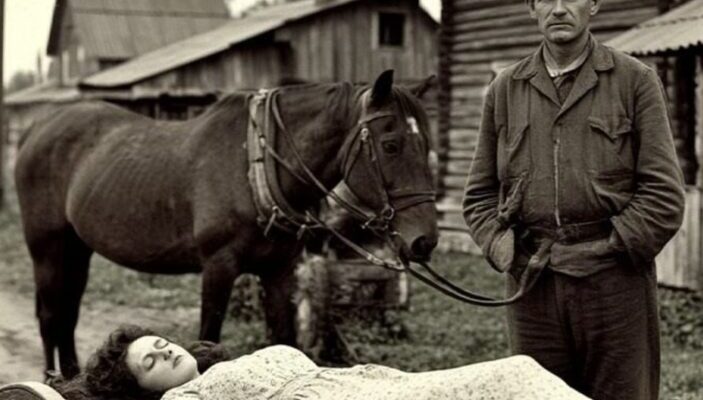
When Valentina married Artyom, she was only twenty-two. Young, bright, with big eyes and a dream of a home that smelled of fresh pies, children’s laughter, and comfort.
She believed it was her destiny. He was older, more reserved, quiet — but in his silence, she felt support.
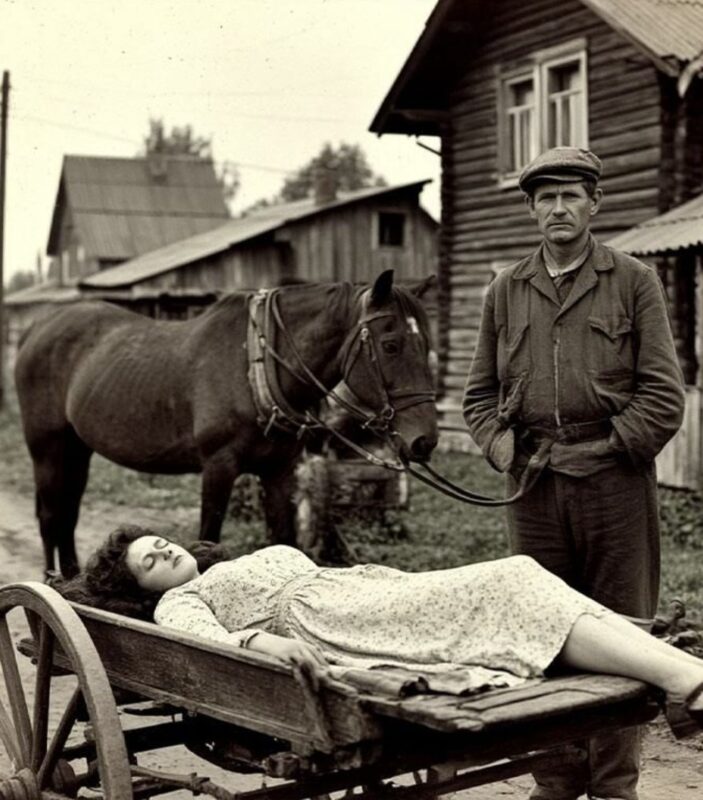
At least, that’s what she thought back then.
Her mother-in-law was wary from day one. Her look said it all: “You’re not good enough for my son.”
Valya tried her best — cleaned, cooked, adapted.
But it was never good enough.
The borscht was too thin, the laundry hung the wrong way, or she looked at her husband with too much affection.
It irritated her.
Artyom stayed silent. He grew up in a home where his mother’s word was law. He never contradicted her, and Valya endured it.
Even when she began to feel weak, lost her appetite, and struggled just to get out of bed — she blamed it on fatigue. She never imagined that something incurable was growing inside her.
The diagnosis came suddenly. Late stage. Inoperable. The doctors shook their heads.
That night, Valya cried into her pillow, hiding her pain from her husband. In the morning, she smiled again, ironed shirts, cooked soup, and listened to her mother-in-law’s complaints.
And Artyom became more distant. His eyes no longer sought hers, his voice turned cold.
One day, his mother came to him and quietly said:
“You’re young, you’ve got your whole life ahead of you. And this one… she’s a burden. Why keep her?”
“Take her to the village, to Aunt Dunya. It’s quiet there, no one will judge you.”
“You’ll rest. Then start a new life.”
He didn’t reply. But the next day, he silently packed her things, helped her into the car, and drove deep into the countryside — where the roads ended and time moved slowly.
Valya was silent the entire trip. No questions, no tears. She knew the truth: it wasn’t the illness that was killing her, but betrayal.
The end of their family, their love, her hopes — it all collapsed the moment he started the engine.
“It’ll be quiet here,” he said, unloading her suitcase. “You’ll feel better.”
“Will you come back?” she whispered.
He didn’t answer. Just gave a short nod and drove away.
Local women brought food. Aunt Dunya would check in sometimes — to see if she was still alive.
Valya lay in bed for weeks. Then months. She stared at the ceiling, listened to the rain on the roof, watched the trees sway through the window.
But death didn’t come.
Three months passed. Then six. One day, a paramedic came to the village. Young, kind-eyed.
He started visiting her, administering IVs, tending to her medication.
Valya hadn’t asked for help — she simply no longer wanted to die.
And a miracle happened. Slowly — she got out of bed. Then stepped out onto the porch.
Then walked to the local shop. People were amazed.
“Coming back to life, Valya?”
“I don’t know,” she answered. “I just want to live.”
A year passed. One day, a car arrived in the village. Artyom stepped out.
Pale, tense, with papers in hand. He talked to the neighbors first, then approached the house.
On the porch, wrapped in a blanket with a cup of tea, sat Valentina. Rosy-cheeked, alive, clear-eyed. He was stunned.
“You… you’re alive?”
She looked at him calmly.
“Were you expecting something else?”
“I thought you…”
“Died?” she finished. “Yes, almost. But that’s what you wanted, isn’t it?”
He was silent. His silence said more than words.
“I truly wanted to die. In that house, with a leaky roof, freezing hands, and no one around — I wanted to die. But someone came every evening.”
“Someone who wasn’t afraid of the blizzard, who didn’t expect thanks. He just did what needed to be done.”
“But you left me. Not because you couldn’t stay — but because you didn’t want to.”
“I got confused,” he whispered. “My mom…”
“Your mother won’t save you, Artyom,” Valya spoke gently but firmly. “Not before God, not before yourself.”
“Take your papers. You won’t inherit anything. I’ve left the house to the man who saved my life.”
“And you — you buried me. While I was still alive.”
Artyom stood for a moment with his head down, then silently walked to his car.
Aunt Dunya watched from her doorstep.
“Go, son. And don’t come back.”
That evening, Valentina sat by the window. Outside — silence. Inside — peace.
She thought about how strange life is: sometimes we don’t die from illness, but from loneliness.
And we recover — thanks to simple human attention, a kind word, and care from those we never even asked.
A week passed after Artyom’s departure. He never said another word — just left. Valentina didn’t cry.
It felt like something essential inside her had snapped — the very part of her heart that still held love for him.
Only a heavy silence remained, like a forest after a storm, when everything is still, but the sense of the storm lingers.
She lived with the thought: the past is behind — the love, the marriage, the betrayal.
But fate had other plans.
One day, a stranger appeared at her porch — in a black jacket, with a worn briefcase.
Not the paramedic, but a young notary from the district center. He asked if Valentina Mezentseva lived there.
“That’s me,” she replied cautiously.
The notary awkwardly handed her a folder of documents.
“There’s… a will. Your father passed away. According to the papers, you’re the sole heir to an apartment in the city and a bank account. It’s a substantial amount.”
Valya froze. A thought flickered: “I don’t have a father.”
The same man who left when she was three had never been a part of her life.
And now, he left her everything?
“But he is legally listed as your parent,” the notary added.
The day passed in a haze. For the first time in a year, Valya picked up the phone and called her old friend Nina, who still lived in the city.
“Valya! You?! Alive? We all thought… Artyom said you died. He even held a memorial!”
Her heart stopped.
“A memorial?”
“Yes. He gathered everyone, said you died in terrible pain. A month later, he sold your apartment.”
“Said he couldn’t bear to live there anymore.”
Valentina sank into a chair. Had he not just left her — but buried her in everyone’s eyes?
Erased her, deleted her. Sold their home as if she had never existed.
Two days later, she went to the city. With Ilya — the very paramedic who had walked to her through snowstorms, no matter what. He insisted on accompanying her.
“In case you need help,” he said simply.
And he was right. Everything checked out. The apartment, the money, the documents — it was all hers by law.
She stepped into her new life not as a woman abandoned to die in a forsaken home, but as someone who could choose her own destiny.
But the story didn’t end there.
One day, Valya was walking through the market and suddenly saw him — Artyom. With another woman. Pregnant.
On his arm walked his mother — now hunched and ill.
The same woman who once thought Valentina “wasn’t good enough.”
Their eyes met. Artyom froze. His face went pale.
“Valya…”
“You didn’t expect this?” she asked calmly. “Did you really think I’d stay dead to the world?”
His companion looked at him questioningly.
“Who’s that?”
“An old acquaintance,” he replied stiffly.
Valya smiled slightly:
“Yes, very old. One you buried long ago.”
She turned and walked away. Ilya was waiting by the car, holding a bag of apples.
“All good?” he asked.
“Yes,” Valya replied. “I’ve taken back my name.”
That evening, she sat on the balcony of her new apartment, wrapped in a blanket, with a cup of hot tea. There was no pain inside — only quiet.
But not the dead kind, like before — a bright, healthy quiet. As if the worst really was behind her.
But life, as always, had more in store.
Months passed. Valentina adapted to her new reality.
Her apartment became warm and cozy: soft light from lamps, flowers on the windowsill, the smell of coffee and scented candles.
She started knitting again — like she did in her youth. The pain was gone. Only a gentle sadness remained now and then — for the lost years, for what couldn’t be returned.
Ilya visited often. Never rushed, never pressured.
He brought groceries, helped around the house, made borscht, and sat silently nearby when she needed space.
One quiet winter evening, as snow fell outside, Valya said:
“You know, for the first time, I feel alive. Strange, isn’t it?”
Ilya smiled:
“Sometimes, to start breathing again, you have to survive suffocation. You’ve been through it. You’re stronger than you think.”
She looked at him for a long time. Then, for the first time in a long while, she leaned against his shoulder.
Not as if seeking salvation. But as someone who was simply there when she needed it most.
A month later, Valya felt weak. At first, she thought it was a cold.
Then she assumed it was just exhaustion. But the doctor, with a kind smile, said something else:
“Congratulations, Valentina. You’re pregnant.”
She froze. Her heart froze with her. Pregnant? After everything that had happened?
After the illness, the betrayal, the death, and the rebirth?
During the ultrasound, the doctor showed her the screen:
“Everything looks good. One baby. The heartbeat is steady.”
When she left the office, Valya cried. Not out of sorrow. But out of immense joy and trembling fear.
As if God had whispered: “Your story isn’t over yet.”
Ilya hugged her, asking no questions. He just held her tightly.
“We’ll get through this,” he said. “Together.”
One day, while reading the local newspaper, Valya stumbled upon a short article:
“Man arrested for fraud. Accused of forging documents, staging the fake death of his ex-wife, and selling her property.”
The name — Artyom Mezentsev.
Her heart clenched sharply.
Valya put the newspaper aside, slowly finished her warm milk, and placed her hand on her belly.
“You will never know betrayal,” she whispered. “You will have a mom and a real dad.”
The delivery was difficult. Valentina lost consciousness several times, her heart pounding like it wanted to burst from her chest.
Around her — doctors shouting, the ceiling light flickering, tense voices. Outside the door stood Ilya — silent as a wall, praying like a child.
And then — a cry. Loud, alive, hungry for the world.
“A girl,” the doctor said. “Tiny, but strong. She looks just like you.”
Valya looked at the small face, the wet eyelashes, and whispered:
“Hello, my life. I’ve waited so long for you…”
A year later.
The kettle boiled in the kitchen. Ilya was feeding Liza porridge while Valya made cottage cheese pancakes.
The sun shone outside, the air smelled of lilacs. There were no screams, no hurtful words, no coldness.
“Look,” Valya pointed to the girl. “She’s smiling. She has your eyes.”
Ilya came over and hugged her from behind.
“And she has your strength.”
“No,” Valya whispered. “My strength is you two.”
She now understood: to reach paradise, sometimes you have to pass through hell. To be reborn, you must first die to your old world. And she had done it.
Two years passed. Life felt solid — like fresh bread on the table: warm, filling, reliable.
Lizonka was growing up a cheerful child with a sunny gaze and dimples on her cheeks.
Ilya had opened a pharmacy, and Valya helped him — managing paperwork, ordering medications, just being there.
Everything seemed to have settled.
But one morning, a letter arrived.
A yellow envelope, messy handwriting. Inside — just one unsigned page. Only a few lines:
“Are you sure he loves you? That Liza is his daughter? Check.
And don’t be surprised when you learn the truth. Ilya is too perfect? Everyone has secrets.”
Her hands trembled. Valya reread it three times. Was this a provocation? Revenge? Or… the truth?
Memories flashed through her mind: their first nights, deep conversations, the moment life began to grow inside her.
Only one person could know for sure. Only one had been there then.
Her phone rang. No caller ID.
“Valentina? Is that you?” — the voice was muffled, almost unfamiliar. “Don’t trust him. Ilya isn’t who he claims to be.
Look into his past. Figure it out yourself. And if you want Liza to stay alive — do as you’re told.”
The line went dead.
That day marked the beginning of a nightmare. Letters started coming weekly.
One with a photo of their house at night. Another of Liza on the playground.
A third — a clipping from an old article: “Young mother found dead after family dispute.”
This wasn’t just blackmail — it was a plan. Someone was watching. Someone knew too much.
Valya kept quiet. She didn’t tell Ilya. Fear paralyzed her. She began checking documents in secret.
Turns out, he changed his surname three years ago. He had a criminal record.
For assault. For threats. For “self-defense,” as one article described it.
One night, she checked his office.
There were her medical records. Photos, bank statements, even a copy of her father’s will.
And Ilya’s job application — for a physician assistant… filled out before he had “accidentally” shown up in that village.
Her heart stopped.
He had known everything. In advance.
Footsteps in the hallway. He entered.
“Looking for something, Valya?”
She turned around slowly.
“Who are you really?”
“The one who saved you when everyone else turned away,” he answered calmly.
“But yes, you’ve figured it out — none of this was by chance.”
“You knew about me?”
“Yes. From the start. I was given a job. But later… I stayed for you. I changed my life.”
“Who gave the job?”
“People who wanted your apartment. Money. And you. But they didn’t know I’d give up everything for you.”
That same night, Valya packed their things. Took Liza and disappeared. Rented a small house in another neighborhood. Told no one the address.
Not Ilya. Not Nina.
But the threats didn’t stop.
Letters. Calls. Demands to sign over the apartment. Warnings that Liza might get hurt.
Then came the final message:
“May 23, 7:00 PM. South Park. If you don’t come — your daughter won’t live to see school.”
She went. She brought a recorder, a camera, and a knife in her bag. Her heart pounded like a drum.
She sat on a bench. A man in glasses sat beside her.
“Congratulations, Valentina. You turned out stronger than we expected.”
“Who are you?”
“A former partner of your father’s. We worked together. He left you more than you know.
Documents. Contacts. Evidence. And as long as you have them — you’re in danger.”
“And if I give them up?”
“Then we’ll forget you exist. If not — your story ends badly. For all of you.”
“I don’t know anything!” — Valentina cried out.
“You will. And soon,” the man said.
He stood, turned silently, and walked away. Ten minutes later her phone buzzed. A photo of Liza, peacefully sleeping in her crib.
After the park meeting, Valya didn’t sleep for three days. She sat by the crib, watching her daughter breathe — evenly, peacefully.
Her mind raced: Who was that man? What documents? Why were they after her? How could she protect Liza?
Then she found an old flash drive among her father’s papers. For years, she hadn’t paid it any mind.
Now, she plugged it into her laptop. Folders opened: “Archive,” “Evidence,” “Finances.”
Inside was the truth — about major Soviet-era scams involving land, factories, and state contracts. Signatures. Surnames.
Names. Some of them still held high positions today.
They feared not the apartment or money — but the exposure.
Everything made sense.
Her father had tried to atone before death. He left her all this, hoping it would protect her. Instead, it brought a curse.
On the fourth sleepless night, Valya made a decision. She gathered the documents, the flash drive, all copies — and headed to an independent news outlet.
There, one journalist worked — Trofimov. An old man, reserved, with honest eyes.
“This is a bombshell,” he said after skimming through.
“You understand — they definitely won’t leave you alone now?”
“I understand. But I won’t stay silent anymore. I’ve already been ‘killed’ once. It won’t happen again.”
Three days later, the article was published. With real documents, names, facts.
The newspaper sold out in hours. TV channels picked up the story.
Investigative committees got involved. Resignations followed. Arrests were made.
And Valya stood by the window, watching Liza draw — her small hands sketching a sun.
“This is for you, mommy,” whispered the girl. “You’re my sunshine.”
Valentina sat down beside her and hugged her tightly.
“No, baby. *You’re* my sunshine. You’re the light that pulled me out of the dark.”
A week later, Ilya returned. He stood at the door with a bouquet of white carnations. Unsure if she would open it. But she did.
“I won’t make excuses,” he said quietly.
“Yes, I was part of the game. But you weren’t part of the plan. You’re the meaning. If you let me, I’ll stay. Forever.”
Valya looked into his eyes for a long time. Then nodded.
“One condition.”
“What is it?”
“No lies. Not one. Even if the truth is scarier than anything.”
He hugged her in silence.
Six months passed.
The case was officially closed. There were no compensations, no acknowledgments, no apologies from the state.
But Valya got something else — freedom, justice, and someone she could trust.
She began to write. Articles about women who others tried to break.
About life after betrayal. About finding light in the deepest corners of darkness.
One day she wrote:
“They didn’t try to kill me with a bullet, but with coldness, lies, and loneliness.
But I survived. Because in my darkest hour, someone reached out a hand.
If you’re hurting right now, know this: darkness is never eternal. The sun always returns.
You just have to wait for it.”