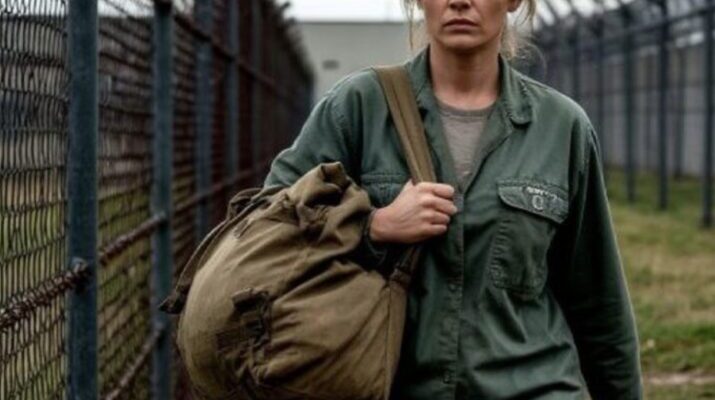
Kristina took a deep breath — the warm air was filled with the scent of freedom.
This was her second time meeting it. The second time she was being released. And the second time she had to learn how to live all over again.
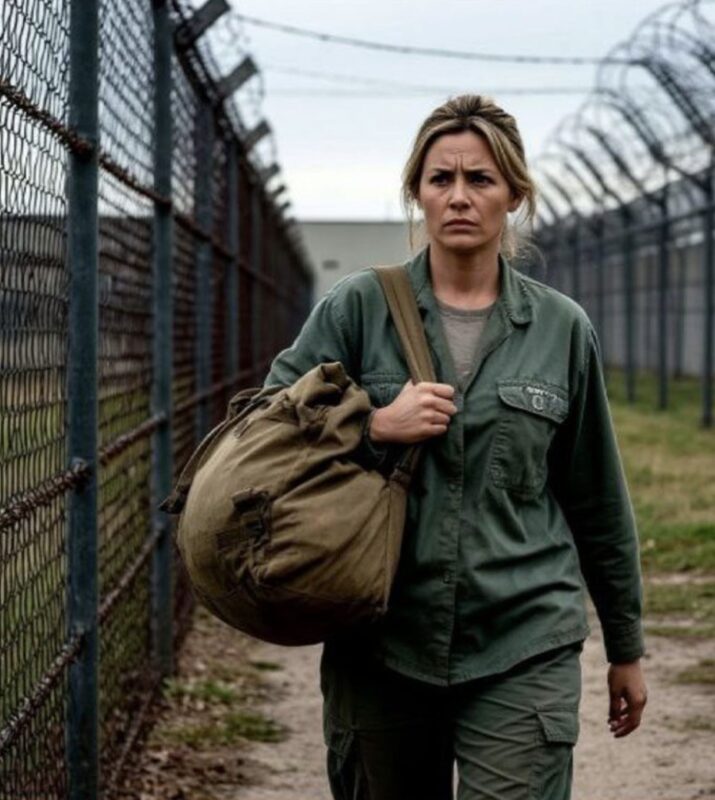
She gave a crooked smile. “It’s fine, hardships make you stronger…”
Yes, these strange, almost absurd challenges seemed to happen only to her. But fine, she would manage.
She would definitely become smarter now. Never again would she help anyone — never!
From now on, everything would be different. Calm, quiet, without unnecessary trouble.
Three years ago, she had already left the walls of her childhood orphanage.
Back then, she believed in kindness, loved the world with all her heart, and felt like part of something bright and whole.
Maybe she was lucky then, or maybe that place had a little more humanity than others…
But no kind memories remained there.
Only pain: constant shouting, humiliation, endless punishments…
If someone “misbehaved,” they were locked in the storage room — they even called it “the cell,” with a tiny window near the ceiling, and only gave water for three days.
Sometimes they were just beaten. It was sickening even to think about it.
One time, on her way to the bus stop, Kristina saw a small child flailing in a pond.
Without hesitation, she rushed to save her.
The little girl fought back as hard as she could, but Kristina was older and stronger.
In the end, she held the girl in her arms, and there was blood from her nose — likely scraped her face while pulling her out.
The people who ran over heard not gratitude, but the child’s angry cries: she claimed Kristina attacked her, not saved her.
Given Kristina’s past, she was quickly taken to the station.
They found a suitable article to charge her with, even though nothing serious had happened. Just another story that worked against her.
Now she had firmly decided: let everyone take care of themselves. She wouldn’t look after anyone.
She’d get on the bus and go where she was supposed to — some house in a remote village an hour away from the city.
She never made it there before — she missed her stop. Maybe that was for the best?
The bus gently swayed over the bumpy road. Kristina dozed off without noticing.
She was awakened by an elderly woman gently shaking her shoulder:
— “Miss, weren’t you going to Kalinovka? We already passed it!”
Kristina barely figured out where she was but nodded. She shot out of the bus like a bullet.
Around her — fields, forest, evening, beauty… But spending the night in nature wasn’t very comfortable.
The village appeared suddenly. First fields, then a street with houses. Everything seemed frozen, submerged in silence.
No one on the street. She checked her documents. The address: a house with remnants of green paint, third from the edge.
There were two that matched. One was clearly a ruin, so it must be the second.
The house was actually better than expected. Kettle, tea, sugar, an old TV, a sofa.
In a few minutes, she was sitting with a hot glass of tea and a loaf of bread, then collapsed into sleep.
She woke to strange sounds. Somewhere nearby, a car, footsteps, voices.
Then a door slammed, and the car drove away.
Kristina tensed. Looked out the window — someone was sitting by the gate, next to a wheelchair.
Trying to get in, but couldn’t.
— “Hey! What are you doing here?” — she called out.
The man looked up.
— “What about you?”
— “I live here.”
He smirked.
— “Then I must’ve gotten the address wrong.”
Kristina came down, helped him get up, and seated him in the wheelchair.
— “How long have you been here?”
— “Since last night,” she huffed.
— “I’ve been here for ten years.”
— “What do you mean?!” Kristina was stunned.
— “You live here on and off?”
— “No! This house was assigned to me by child services — I’m an orphan! I have the papers! Of course, the house is…”
— “Let’s check,” he said calmly. “Let’s go inside.”
Kristina agreed. She thought he seemed too confident in the place.
He even knew where to get two planks to roll up to the porch. How? Maybe he really had lived there?
Inside, Kristina handed him her documents immediately. He didn’t even read them, just set them aside.
— “Can you make some tea?”
She jumped up and poured tea. Only when he started drinking did he pick up the papers, skimmed them, and smiled:
— “Did you check the house number?”
Kristina shook her head.
— “This is number thirty. You need thirty-two — across the road.”
— “What?! That one’s falling apart! It’s scary to even enter!”
— “That’s unfortunate,” he nodded. “But we don’t get to choose.”
Kristina sank into a chair. Everything was going wrong again.
— “What should I do?”
— “Nothing. There’s enough room. Pick any room and live here. You won’t bother me, and no one else is coming.”
— “But I’m an orphan! I have no other home!”
— “Fine, stay if you want. Help out occasionally. Fix your house, get a job — your life will start.”
Kristina thought about it. His words made sense. He didn’t seem dangerous.
On the contrary — polite, even kind.
— “My name is Kristina.”
— “Andrei,” he replied. “Don’t be afraid. I wasn’t always like this… I was an athlete.
Got into an accident. Everything changed after the injury. My wife brought me here, said — this is your place.
She took the car, the apartment’s on the fourth floor — and I can’t climb stairs anymore. So now I live here…”
Kristina looked at him and felt something soften inside her.
She came with the decision not to get involved in anyone’s life.
And now she sat in a stranger’s house, drinking tea, realizing: maybe they were both strangers to the world — but not to each other.
— “And you say all that so calmly?!” Kristina was deeply shaken.
If only she could meet that “wife”! At the orphanage, people like her would be properly “dealt with” — no one came out unscathed.
— “Let’s switch to first names,” Andrei smiled. “I’m not that old. Only thirty-two.”
— “Alright… let’s,” Kristina agreed, a little shy.
Lying in her room, she couldn’t fall asleep. Her thoughts wouldn’t rest. Fate…
She, an orphan, never had anything good — but she still had faith in the future.
Andrei had everything: health, success, love… And now? Emptiness.
What awaits someone whose life suddenly fell apart?
In the morning, the sounds of the village woke her — roosters, cows, voices.
She looked at the clock: six a.m.! “Where is everyone rushing so early?”
She smelled the air — coffee. Strange feeling… Throwing on a jacket, she came into the room.
Andrei was skillfully making breakfast, despite the wheelchair.
— “Hey! I thought I’d brew some coffee. Two cups!”
Kristina inhaled the aroma.
— “Wow! Smells so real!”
— “Have you ever had real coffee?” he smiled.
She shook her head, watching him.
A minute later she tasted it — bitter, harsh. Tried another sip, but failed.
Andrei noticed her grimace.
— “Don’t like it?”
— “Not really,” she admitted honestly.
He laughed.
— “Lucky you. You won’t get addicted. Coffee is like a drug for adults.”
— “Then let’s have tea,” Kristina smiled.
— “Alright, Kristina. Now let’s figure out how we’ll live.”
A week later, she got a job at the grain facility. There were questions about her past, but Kristina told everything honestly. The boss decided to give her a chance:
— “Start as an accountant, we’ll see how you do.”
She came home in the evenings tired, sometimes dusty, but happy.
Andrei always welcomed her, listened, supported her, gave advice, celebrated her successes.
And Kristina felt needed. Truly loved.
On their first day off, she said:
— “Let’s take a walk! We barely know the village. I haven’t seen it at all.
And you can’t hide forever!”
He looked surprised, then nodded:
— “You’re right. Let’s go.”
People in the village were starting to get used to her.
They greeted her, even chatted with Andrei, without avoiding eye contact or jumping to conclusions. He started to open up, even joke.
At home he said:
— “Today felt like a whole journey for me. Thank you.”
— “This is just the beginning! We’ll do great things!” Kristina smiled.
She took his hands, and for the first time in a long time, he looked at her warmly and sincerely.
— “And what do doctors say? Are there any chances?”
— “They say all kinds of nonsense. ‘Just get up and walk.’ But what if I can’t? If my legs just won’t listen?”
Andrei waved it off and rolled into his room. Kristina watched him go.
Not now — but soon, she would find a way to help him.
The next day, she went to the local medic.
— “Hello! I’m Kristina. My husband… I mean, my neighbor… has a problem.”
The medic nodded knowingly.
— “I know who you mean. How can I help?”
She told him everything — about the injury, the diagnosis, how Andrei had lost hope. The medic thought for a moment.
— “I’m not a specialist, but I have a friend — a doctor. I’m visiting him tomorrow. Bring the documents — he’ll consult with colleagues.”
Kristina promised. And she really did find the papers.
But at home, a horrible sight awaited her — Andrei lay on the floor, his wheelchair tipped over.
— “Andrei! What happened?!”
He opened his eyes, breathing fast and hard.
— “I wanted to stand… just once… to be with you properly. But I didn’t have the strength… Just fell…”
Kristina held his head to her chest.
— “You’re crazy… You can’t do that! You have to train, prepare… not throw yourself into it blindly.”
— “Kristina…”
She kissed him gently.
— “You’re disabled… And I’m an orphan and an ex-convict. So what? We’re right for each other.”
The medic came through. His friend turned out to be Andrei’s treating doctor.
He gave advice, books, and detailed instructions. Kristina armed herself with them like a knight before battle.
Sometimes Andrei got tired, angry, whispered:
— “Why do I deserve this happiness? You’re young, beautiful… and I’m broken.”
— “And I’m an orphan,” she replied. “So what? We’re together. That’s what matters.”
Six months passed. The first step. Then a second. Then a third. Andrei slowly but surely learned to walk again.
One day he said:
— “I need to go to the city. For one day.”
— “Let’s go together!” Kristina offered.
— “No. Alone. I need to settle something.”
Her heart clenched. His wife? The past? She nodded silently:
— “Alright…”
She cried all day, packed her things, decided to leave. She couldn’t stay here knowing he left for another life.
But in the evening she heard a sound at the gate. Looked out — a car.
Out came Andrei with a huge bouquet of flowers.
Kristina ran to meet him. He handed her the bouquet, then a small box.
— “Marry me. I filed for divorce today. Now we can start over. Just you and me.”
Kristina threw herself into his arms, sobbing with happiness.
They stood at the doorstep of the house where they once met by chance. But now — it was forever.