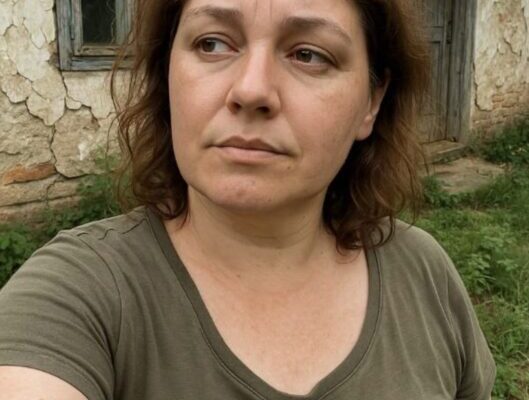
I stood in the doorway, my backpack on my back… and for the first time in my life, I didn’t cry.
I only said:
– Fine. But don’t be surprised if the person you’re kicking out today never comes back.
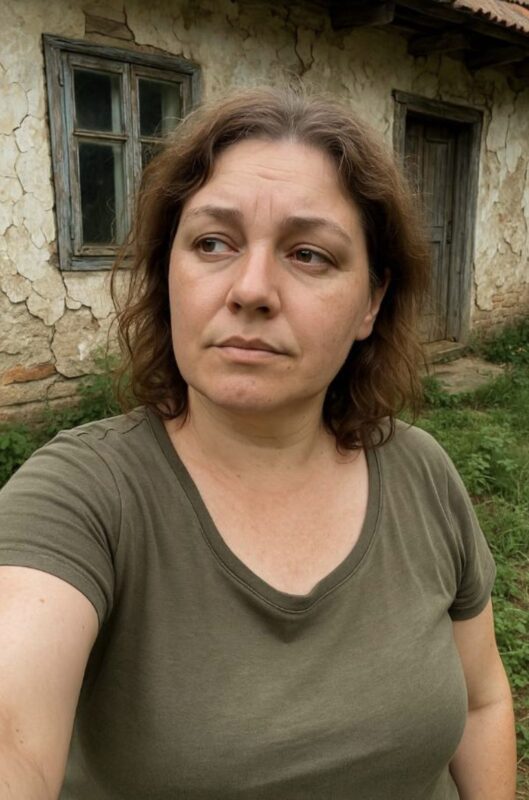
And I walked out.
Just three weeks ago, I was standing by the stove, stirring the onion sauce, occasionally glancing at the clock: Máté should have been home in half an hour – he hated it when dinner got cold.
I used to cook with love.
I played with flavors, arranged the food beautifully, and always tried to surprise him.
Now, it had just become another obligation. Like cleaning. Washing. Or staying silent when my mother-in-law came to visit.
The door slammed earlier than usual.
I flinched. I quickly wiped my hands and stepped into the hallway.
– You’re home, Máté? Dinner will be ready in ten minutes – I said quickly.
– I didn’t come alone – he replied while taking off his shoes.
Behind him, his mother Bözsi appeared.
– Good evening, Bözsi mama – I tried to sound polite. – I’m cooking right now.
– Onion sauce again? – she wrinkled her nose, giving me a critical look. – How many times do I have to tell you that the onions should be browned to a golden color, not black! Otherwise, the whole thing will be bitter!
I didn’t respond.
The onions were perfect. But arguing with her was like shouting at water.
– Oh, mom, leave her alone – Máté waved dismissively as he plopped down in a chair. – She cooks and feeds us, that’s what matters.
– That’s exactly the problem! She just “feeds” us! A young woman should cook in a way that makes the man lick his ten fingers! When I was young, the whole street envied my cooking!
By now, I had learned to turn off my hearing when she said things like this.
After five years of marriage, it no longer hurt.
It just exhausted me.
My phone vibrated on the table.
I reached for it, but Máté was faster.
– They’re calling from Berettyóújfalu – he said in a detached tone. – Probably about your grandmother’s house again.
My throat tightened.
Only three weeks had passed since Grandma Zsóka died – the only person who ever loved me unconditionally.
Every call from there still hurt.
– Hello? – I said quietly into the phone.
On the other end, Aunt Katica’s voice, warm but firm, came through:
– Darling, it’s time to come. We need to sign some papers… the house, the garden, the apple trees, the creek – don’t let everything fade away.
– Yes, I’ll come this weekend – I replied.
I hung up the phone… and something moved inside me.
Something quiet and resolute.
– Is it about that shack again? – Máté asked with his mouth full. – Sell it while someone is still willing to pay for it. It’ll just be trouble.
– I don’t want to sell it – I said quietly, but firmly. – The memory. It was my grandmother’s.
– Oh, here we go again with this sentimental nonsense! – he scoffed. – A mud and straw shack in the middle of nowhere, no electricity, no gas!
– But it has a yard with apple trees – I whispered. – My grandmother was always proud of it.
– Now you’re going to say you want to move there! – Bözsi mama laughed. – Into the moldy corners! Congratulations!
In the following weeks, I ran around between institutions.
I took time off, visited notaries, the local government, and offices.
Máté didn’t care.
He only complained in the evenings when I came home tired:
– Where have you been all day again? The shirts aren’t ironed, the dinner isn’t ready!
– I told you I’m taking care of the inheritance – I whispered.
– Inheritance?! A hole at the end of the world? Sell it and forget about it!
But I couldn’t forget.
The house where I grew up called me back.
And I heard the call.
When I finally held the property document in my hands, a sense of relief took over me, something hard to describe in words.
I made a special dinner, bought a bottle of red wine, and placed the papers on the table.
Máté came home in the evening.
– Now it’s officially mine – I said with a smile.
He just sighed:
– At least now you have somewhere to run to when everything falls apart here.
– Excuse me?
– If you don’t like how we live here, go back to your little shack, take your two bundles, tie a scarf around your head like in fairy tales, and move there. Let me see how well you’ll be there!
I’ll never forget that evening.
Because right then… something inside me broke for good.
I didn’t cry.
I didn’t yell.
I didn’t throw anything at him.
I just stood there, listening to the echo of his words in my head. And I thought to myself: “This is no longer life. This is survival. Day by day.”
It was late when I packed.
I didn’t take much: a backpack. A few clothes. An old photo of Grandma Zsóka. And the property document – for the house everyone here called “the crumbling shack.”
Then I left.
I didn’t look back.
Not even at the gate.
Not even when Máté shouted:
– If you walk out that door now, you’ll be nobody without me!
I almost heard his words slam into my back.
But I just kept walking.
I stepped out into the street, inhaled the cold night air deeply…
… and for the first time in a long time, I felt… alive.
I walked to the bus stop. With trembling hands, I pulled out my phone.
There was only one number I knew I could still trust.
– Hello? – Aunt Katica’s voice came through the line.
– It’s me… Can I sleep at your place tonight? – I whispered.
– Of course, darling. I’ll come get you.
I got on the first night bus.
I pressed my forehead against the window, watching as the streetlights melted into a single blurred strip of light.
Each stop took me further from the place where I had long forgotten who I was.
Further from the house where I had shrunk smaller and smaller over the years.
When I arrived, Aunt Katica was making tea. She didn’t say a word.
She didn’t ask anything. She didn’t blame me. She was just there. There, when and where I needed her.
The next morning, I set off for Grandma Zsóka’s house.
The garden gate creaked like an old, painful memory.
The garden was overgrown with weeds, the roof sagged, and the plaster had crumbled in places.
But when I stepped inside, an old, familiar scent hit me: damp earth, old apples, and the smell of the past.
This was where I grew up.
This was where I felt loved.
I walked through the rooms. I ran my hand along the cracked walls. Grandma Zsóka’s old scarf was still lying on the bed.
Right then and there, I realized: I didn’t want to just survive anymore.
I wanted to live.
The next morning, I made a list.
– Roof repair – I wrote in the first line.
– Foundation reinforcement.
– Yard cleaning.
I didn’t have much money.
But I had time.
And more importantly: I had a new kind of strength. Determination.
On the third day, my phone rang.
It was Máté.
I picked up. Silence. Then the familiar, disdainful voice:
– Are you done with this childish tantrum? When are you coming home? I’ll forgive you.
I don’t know why my voice didn’t shake.
I don’t know why the pain that had always hurt before didn’t come back.
Maybe because I finally knew who I was.
– I’m not coming back, Máté – I said calmly. – Never again.
Then I hung up.
I didn’t call back.
I didn’t answer his messages.
Every evening, when I returned to the little shack and looked through the window at the sunset behind the old apple trees, I felt:
I hadn’t lost anything.
I had gotten everything back that I had ever lost: my peace, my self-esteem, my memories… and myself.
The days passed quickly.
Every day brought a small progress: a little painting, a weed pile removed, a few new tiles on the roof.
I did everything by myself.
And yet… for the first time, I wasn’t truly alone.
Because Grandma Zsóka’s memory was with me. Her voice in my head, when she said: “My girl, you are always capable of more than you believe.”
Aunt Katica was with me, who brought over a pot of warm soup once a week and simply said: “You don’t have to do it all alone.”
And there was the silence.
The comforting, peaceful silence. Where I didn’t have to fear loud words, critical looks, or what someone else thought I “should” be living like.
One evening, as I sat on the porch sipping elderflower tea, an unexpected car stopped at the gate.
Someone got out, walked up to the gate, and began shouting:
– Enough of this charade, do you hear me?! This isn’t life! Look around! Look at yourself! This filthy den is not worthy of you!
I walked to the gate.
I stood calmly facing him, no longer afraid. His gaze trembled in shock.
Maybe for the first time, he really saw me.
– You’re right – I replied. – This little house isn’t worthy of the woman I used to be.
Then I smiled.
– But it’s worthy of the woman I’ve become.
Máté took a step back in confusion.
– You… you really aren’t coming back?
– No – I said. – And this time, you don’t need to understand.
I went back into the house, shut the door behind me, and never opened it for him again.
I didn’t need permission, validation, or approval anymore.
All I needed was what I felt inside.
Months passed.
The roof was beautiful again, the garden bloomed. I learned to plant seedlings, paint, and fix the eaves.
People at the edge of the village started greeting me as if they knew me.
And I became familiar to myself.
One year after I turned my back on Máté and the abuse, the house was no longer just livable – it was home.
The fire crackled in the stove, and the apple trees bloomed again in the yard.
And every evening, when I sat on the porch and looked at the stars, I would say to myself:
“I’ve come home.”