I was sitting by her bed, watching her chest slowly rise and fall – each breath growing heavier, shallower, a true torment for her worn-out body.
The hospice room was thick with the scent of disinfectant, blending with the sweet, suffocating aroma of wilting flowers in the corner.
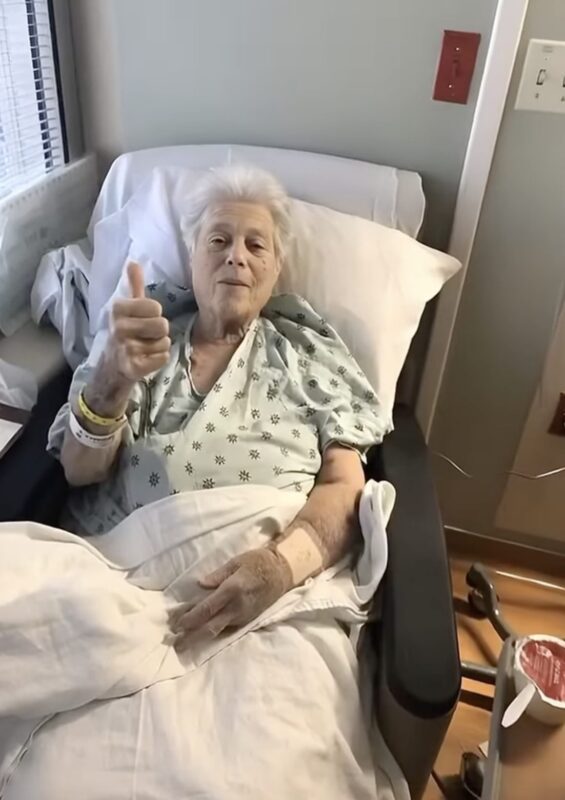
The dim light filtering through the blinds cast ominous, dancing shadows on my mother’s sunken, pale face, highlighting the wrinkles and the exhaustion etched by illness and years.
For months, I’d watched her waste away – slowly, mercilessly – but today felt different.
The air carried the silent stillness of finality.
Today… this was the end.
The nurse, a young woman with tired yet compassionate eyes, had warned me that morning:
— It could happen at any moment, she whispered as she adjusted the IV.
Sometimes people hold on to something… something important.
I had no idea what my mother might still be clinging to.
Her life – as far as I knew – had been simple, filled with work and care… and an awful lot of silence.
I couldn’t imagine what that “something” might be… until she suddenly opened her eyes.
Her gaze, vacant for months, now locked onto me with startling clarity – full of love and… something else I hadn’t seen in years.
Not during the rebellious teenage years, filled with daily arguments and unspoken wounds.
Not after the painful words we’d hurled at each other in anger.
Now, there was only pure love in her eyes – bare, unfiltered.
I reached out and held her hand – fragile, nearly translucent, her veins bulging beneath the skin.
I squeezed gently, trying to pour all my feelings into that touch: love, maybe forgiveness… or simply desperate presence.
— Mom, it’s okay, I whispered, my voice trembling.
You can rest now. Everything’s okay.
Her lips quivered slightly, as if gathering every last ounce of strength for one final task.
I leaned closer, my heart pounding so hard I thought it might burst from my chest.
I waited.
A goodbye.
A piece of advice.
A simple “I love you.”
Her voice was barely more than a breath.
And what she said shattered me to pieces.
— Your father… is alive.
I recoiled.
My body froze, as if I’d been slapped.
I couldn’t take my eyes off her face, though my vision was blurred by tears.
— What…? was all I could stammer, my voice shaking, as if something inside me had torn apart.
A soft sigh was her only reply – the final breath before the storm fell silent.
Her fingers went limp in my palm.
I held on, instinctively, desperately.
But it was already too late.
And I was left – alone.
Utterly alone in that frozen room, clutching her cold hand, crushed by her final words.
A single sentence that didn’t just turn my life upside down – it split it in two: before and after.
The funeral was gray.
Not just the sky, not just the clouds – everything.
The faces, the flowers, even the earth that slowly covered her coffin.
A few neighbors came, some retired coworkers from the library where she had worked for years.
Standard condolences, forced hugs, vacant stares.
Everyone thought I was shattered by grief.
But no one knew the storm that raged inside me.
The grief was real, of course.
I felt the ache of her absence, the silence she left behind.
But beneath that grief was something else – a dark, cold vortex that kept pulling me deeper.
Because of her last words.
Because all my life, I believed my father was dead.
A tragic car accident.
That’s what my mother had told me over and over again.
I clung to her words like a child to a bedtime story.
And now… now she whispered he was alive?
That question burned inside me.
After the funeral, everyone went home.
I stayed.
I stood alone by her grave, my face soaked, my hands clenched into fists.
I couldn’t move.
One sentence – “your father is alive” – had dismantled everything I’d ever believed.
It was chilling to think my mother had lied to me my entire life.
And not just a small, white lie.
But a lie about my very roots.
At home, I sat in the living room for hours.
I stared at the couch where she last sat.
The bookshelf she always dusted.
The teacup she never put away properly.
Everything was too quiet.
And I… I was drowning.
The next morning, I decided it was time to sort through her things.
Her bedroom was almost untouched.
I could still smell her scent on the bedding – that faint lavender note she loved so much.
Every object I picked up seemed to speak to me: “Get to know me. Get to know her like you never did before.”
In the living room, deep in an old cabinet behind the insurance papers, I found it: a crumpled envelope with my name – “To Szilvia” – written in her delicate handwriting.
My hands trembled as I opened it.
Just a single page, yellowed paper, a few lines.
[ ]
It wasn’t a farewell letter.
It was a confession.
She wrote about her fears.
That she never wanted to hurt me.
That she thought it was better for me to mourn a “hero” father than know the truth – that he was alive but absent.
That she had been terrified of disappointing me… or me disappointing him.
I read it.
Then read it again.
And again.
My heart broke and healed all at once.
Because for the first time, I understood something – her intent, even if I didn’t agree with it.
But most importantly, I knew I had to look for something.
Because I was certain this letter wasn’t the end of the story.
I rushed up to the attic.
The place I had hidden so many times as a child.
Dusty boxes, old toys, Christmas decorations, a lost puppet.
Everything bore the mark of a past life.
Then I saw it.
An old wooden box.
Taped shut as if someone never wanted it opened.
Hands shaking, I opened it.
She picked out a stack of photographs.
A man.
He must have been in his thirties, with slightly disheveled black hair and smiling eyes.
In the background, there was a sign – hard to read: Northstar Harbor.
On the back of the photo, a name: Ramon.
And a date.
More than twenty years ago.
My heart skipped a beat.
This was him.
My father.
A man I had never known.
But who, I now knew, had always been there… somewhere.
Beneath the pictures, letters lay scattered.
All addressed to her – my mother, starting with “Dear Cecília.”
In them, he wrote about hope, pain, and his wish to see me.
That he didn’t understand why she wouldn’t let me be a part of his life.
And the reply letters… written in my mother’s handwriting, with broken sentences, often crossed out.
“I fear… I fear what it would mean if you came back.”
“Our daughter would be better off without you.”
I felt as though the ground had slipped from beneath my feet.
I spent days in the attic.
The world stood still.
I was living another life – the one where I had a father who wanted to know me.
And a mother who had deprived me of that.
But who perhaps only wanted the best for me.
From the letters, I knew where I had to go.
A small town by the sea, the place Ramon had written from – Northstar.
Based on a few hints, I knew he had worked at the harbor, in a warehouse.
There was no exact address, but that was enough.
I didn’t think about it any longer.
The next morning, I got in the car.
The drive to Northstar took three and a half hours, but it felt like a whole lifetime had passed.
My thoughts were racing: What if he didn’t live there anymore?
What if he didn’t recognize me?
What if he didn’t want to see me?
– and most of all: What if I didn’t actually want to meet him?
The town was exactly as it looked in the picture.
Old wooden houses, white-painted fences, fishing boats swaying on the water along the harbor.
The wind carried the scent of the sea, and every second house had shells hanging from strings in the windows, clinking in the breeze.
I stopped in front of a fishing supply store – the sign had mostly worn off, but it still read: “_bait & _tools.”
I went inside.
A woman in her fifties stood behind the counter.
Her face was marked by the sea wind, and her eyes were gentle.
I took out the Polaroid photo I had brought from my mother’s attic.
“Excuse me… do you know this man?”
The woman took the photo, squinted at it, then nodded slowly.
“I don’t know him well,” she said quietly.
“But he used to come here often, years ago.
With another man, if I remember correctly.
He talked about a child…
He said he was always waiting, always hoping.
I know he lives at the end of Frog Hollow.
A small house, close to the shore.
Very… old-fashioned.”
My heart was pounding in my throat.
“Thank you… thank you so much!” I stammered, and almost ran out.
The house was exactly as the woman had said.
Faded blue walls, a cracked wooden floor on the porch, a neglected garden.
A small brass doorbell hung on the front door, which jingled when I knocked.
The door opened almost immediately.
The man who appeared had graying temples, but his eyes were the same as in the photo – and the same as the ones I saw in my own reflection every day.
Warm brown eyes, tinged with sadness.
Our gazes met.
“Are you… are you Ramon?” I asked, barely audible.
The man didn’t answer right away.
He looked me up and down, then his eyes widened.
It was as if a realization had flashed through him, a memory that had finally taken shape.
“Yes,” he said slowly.
“How can I help you?”
It took a few seconds.
Then I took a deep breath.
“I… I’m Silvia.
Your daughter… I’m your daughter.”
The silence that followed seemed to hit us with physical force.
The man stepped back.
His eyes filled with tears.
“I knew… I always knew,” he whispered, his voice trembling.
“I was waiting for this day.
But I had stopped believing in it.”
He invited me inside.
The house was modest inside, but clean.
We sat in the kitchen.
For a while, we just looked at each other, as if we were trying to discover all the missing years in each other’s eyes.
“My mother…” I began, and the words caught in my throat.
“She said you were dead.
And in her last moment… all she whispered was: ‘Your father is alive.’”
The man lowered his head.
His hands clenched into fists on the table.
“I fought.
You have to know, I fought for it.
I wrote, I called, I tried…
But she said it would be best for you if you didn’t know about me.
She said the absence would hurt less than the disappointment.
That she couldn’t give you a secure future with me.
And… in the end, I believed her.”
Tears streamed down my face.
“But why didn’t you come?
Why didn’t you search for me?”
“I thought you didn’t want to.
I thought I didn’t matter anymore.
And… maybe I was afraid.
I was scared you would see me and only have anger in your eyes.
Like now…”
I shook my head.
The anger was there.
But so was the curiosity, the germ of love.
And the pain… it raged in both of us.
We talked until the evening.
He told me about his life – the sea, the harbor, the hard years when he had no roof over his head.
Then about loneliness, the lost years.
He said the thought had always been in his mind: “What if one day she knocks on my door?”
I also shared my story.
About my childhood, the loneliness, the questions I never asked because “there was no answer.”
The sad story my mother told – the one I believed was true.
The lost birthdays, the missing hugs.
The absence.
Of him.
When I left the next day, my heart was heavy – but no longer empty.
A few weeks later, on another sunny Sunday, we stood at my mother’s grave.
My father – Tamás, as his Hungarian name turned out to be – stood beside me.
He placed his hand on my shoulder.
“Forgive her,” he said quietly.
“She only wanted to love you.
In her own way.”
I placed a bouquet of wildflowers.
“I forgive you, mother,” I whispered.
“I understand now.
Thank you for your last gift.”
Since then, we haven’t become a “perfect family.”
There’s no miraculous, movie-like reunion.
But there’s something that never existed before: truth.
And a chance.
A chance to rewrite what we can.
To live the days together from now on.
To love, laugh, and remember – not what was lost, but what can still be saved.
Because sometimes the most painful truths give the purest love. ❤️