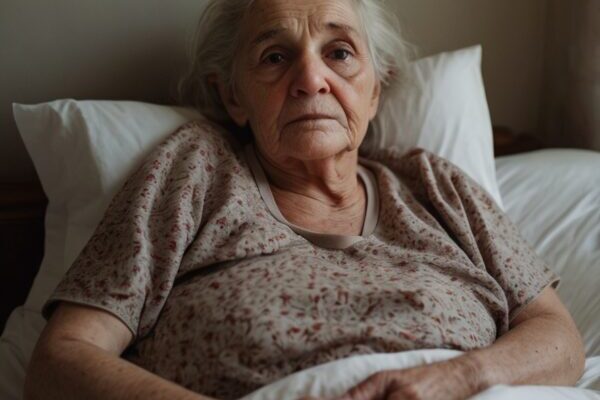
It was a rainy Tuesday when I first received the call. The voice on the other end was cold and distant, but the words it carried were enough to shake my world to its core.
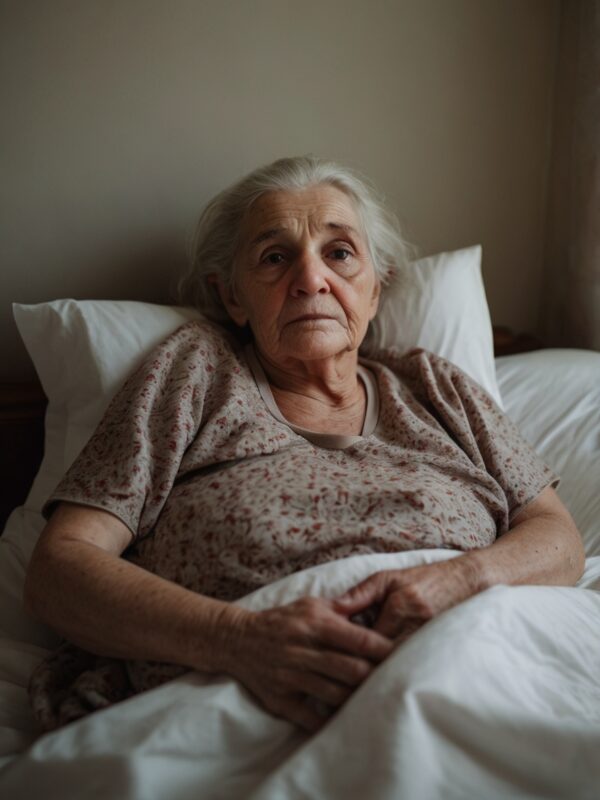
“Ms. Amelia Moore?” the lawyer’s voice asked. “This is Andrew Foster from Whitaker & Sons. We have an important matter regarding your late aunt’s estate. We would like to meet with you as soon as possible.”
My heart skipped a beat. Aunt Evelyn had passed away two weeks earlier, and I’d been so wrapped up in caring for her during her long battle with cancer that I hadn’t had the chance to think much about what would come after. I had lived with her, been by her side, and helped her with every aspect of her life. From doctor’s appointments to grocery shopping, I had become her primary caretaker—her everything. She had no children of her own, and her husband had died years ago. I always assumed that when the time came, everything would pass to me. After all, I had been there for her in ways that no one else had.
I arrived at the lawyer’s office with a mixture of anticipation and dread. I had no idea what to expect, but I figured it would be a straightforward process. It wasn’t uncommon for family members to inherit things from loved ones, and I assumed that my years of sacrifice and dedication to Aunt Evelyn’s care would be rewarded with something.
When I walked into the office, I was greeted by Andrew Foster, a man in his late fifties with glasses perched at the tip of his nose. He seemed polite but professional, his demeanor giving nothing away. He ushered me into a small, well-lit conference room and sat across from me. The air in the room was thick with tension as I waited for him to speak.
“Ms. Moore, I’m sure this is a difficult time for you,” he began, his voice gentle. “And I’m here to go over the details of your aunt’s will.”
I nodded, expecting the usual formalities. But what came next was anything but what I had imagined.
“As you may know, your aunt made some unusual decisions in her will,” he continued, flipping through the pages in front of him. “She left everything—her property, savings, and personal belongings—to a Mr. Charles Bennett.”
I blinked, not quite understanding what he was saying. “Excuse me? Who is Charles Bennett?”
Mr. Foster cleared his throat and explained, “Charles Bennett is a man your aunt met about five years ago at a support group for cancer patients. He was never a part of your family, and you were never mentioned in the will.”
I felt my chest tighten, my breathing growing shallow. “This doesn’t make sense. I’ve been here for her through everything—through her diagnosis, her treatments, her pain. I’ve been her only family for years. Why would she leave everything to a stranger?”
Mr. Foster’s eyes softened as he looked at me. “I understand this is difficult, Ms. Moore. From what I gather, your aunt and Mr. Bennett became very close during her illness. He was her emotional support, and she came to see him as more of a companion than a mere friend. It seems she trusted him deeply in her final years.”
I couldn’t breathe. It felt like the room was closing in on me. I had given up my entire life to care for Aunt Evelyn. I had dropped everything—my job, my friends, my own ambitions—all to be there for her. Yet, this stranger, someone I had never even heard of until now, was the one she had chosen to inherit everything.
“How could she do this?” I whispered, my voice cracking. “I was the one who was there for her when she needed someone. I was the one who stayed up with her through the nights when she couldn’t sleep. I was the one who made sure she had everything she needed. I was her family.”
Mr. Foster didn’t answer right away, but I could see the sympathy in his eyes. He was simply doing his job, but it didn’t make the truth any easier to bear.
“You may want to consult with an attorney to see if you have any legal recourse,” he said gently. “But I have to tell you that your aunt was very clear in her wishes. There are no mentions of you in the will, and everything has been left to Mr. Bennett.”
I left the lawyer’s office in a daze, the weight of his words lingering like a shadow that refused to leave. I couldn’t stop replaying the conversation in my mind, trying to understand how I had missed something so monumental. How had I failed to notice the growing bond between Aunt Evelyn and Charles Bennett? Was I so consumed by my caregiving that I hadn’t seen the changes happening right under my nose?
I spent the next few days going over every detail of my aunt’s life, trying to find some sign that would explain her decision. There had been no mention of Charles Bennett to me in the years I had spent with her. Every conversation I had had with her was about her health, her struggles, or her occasional complaints about the people she used to know. I had never seen her so much as mention this man.
I finally decided to reach out to Charles Bennett. Perhaps, in his eyes, there was a reason for this decision that I couldn’t see. Maybe he could help me understand.
When I called him, his voice was warm but distant. “Amelia? I’m sorry for your loss. Evelyn spoke of you often, but I know this must be hard for you. I never wanted to hurt anyone, especially not you.”
The conversation that followed was heartbreaking. Charles explained that in her final years, Aunt Evelyn had grown more isolated from her family. He had been there for her during the most difficult times, even though he was not her family by blood. He spoke of their late-night talks, their quiet moments together, and how she had confided in him her fear of leaving behind nothing.
“She trusted me,” he said softly. “And I promised her that I would take care of everything after she was gone.”
I hung up the phone that night feeling broken. I had cared for Aunt Evelyn out of love and duty, but in the end, it seemed that her heart had found a different kind of solace. It wasn’t a matter of betrayal or negligence—it was simply the reality of a woman who had lived a life full of pain, seeking comfort where she could find it.
In the months that followed, I had to come to terms with the decision my aunt had made. It was painful, yes, but it taught me a valuable lesson: the love we give to others is not always reciprocated in the ways we expect. Sometimes, it’s not about the amount of time or sacrifice we make, but the emotional bonds that form when we least expect them.
I would always be grateful for the time I spent caring for my aunt, but I also realized that, in the end, her choices were her own—and I had to respect them, even if they broke my heart.


