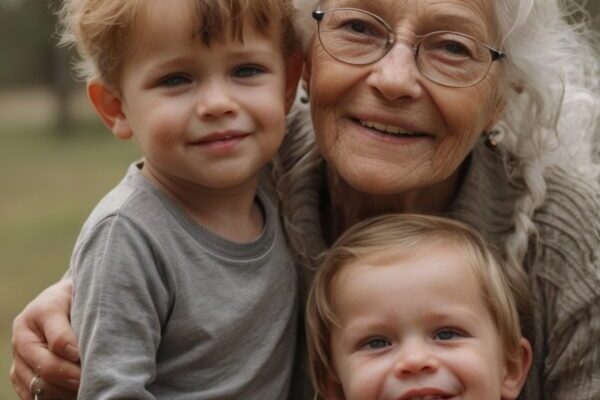
I always believed that family came first.
As a mother, I had spent my life raising my children, teaching them the values I held dear, and providing them with the best I could offer.
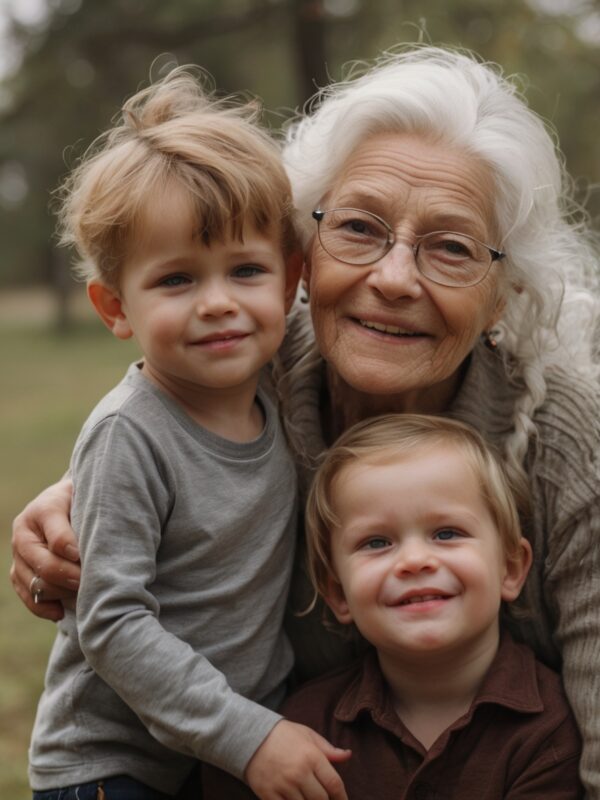
So when my daughter, Laura, asked me to help take care of her children so she could focus on her career, I didn’t hesitate.
Laura had always been driven, ambitious.
She worked tirelessly to build a successful career, and I was proud of her for it.
But when her life became too overwhelming to juggle both work and raising her young children, I stepped in.
I knew it was my role as a mother and grandmother to support her, to help her succeed while also giving her kids the love and attention they needed.
For years, I played the role of caretaker.
I’d pick up the kids from school, make them their favorite meals, listen to their little stories, and offer them a sense of stability.
I loved being there for them.
It was fulfilling, and I cherished those moments.
Laura’s career flourished.
She climbed the corporate ladder, traveling for work, attending meetings, and leaving her children in my care for long stretches.
I didn’t mind.
I was happy to help.
The days were long, but the love I had for my grandchildren made it all worth it.
I never asked for anything in return.
It wasn’t about compensation; it was about family, about making sure my daughter could chase her dreams without worrying about her kids.
But time had a way of passing quickly.
The years blurred together, and I found myself getting older.
I wasn’t the same energetic woman who could run around after toddlers or stay up late for PTA meetings.
My body started to show signs of wear and tear, and I couldn’t deny it any longer—I was tired.
I never expected to hear what came next.
It was a sunny afternoon when Laura sat me down in her kitchen, her face tight with concern.
I had been feeling a bit under the weather for a few weeks, but nothing too serious.
I assumed she had noticed my fatigue, perhaps my slowing pace as I did the daily chores around the house.
What I didn’t expect was the coldness in her voice when she spoke.
“Mom,” she said, her tone calculated, “I think it’s time we talk about your future.
I’ve been looking into some options, and I think it might be best for you to move into a nursing home.”
I stared at her in disbelief, trying to process her words.
Nursing home?
Was she serious?
“I know this is difficult, but you’re getting older, and you need more care than I can provide,” Laura continued, her voice distant.
“I’ve been thinking about it a lot, and I believe this is the best solution for everyone.”
The room felt as though it were closing in on me.
I wanted to shout, to ask how she could even think of such a thing after everything I had done for her and her family.
I had dedicated my life to her, to her children, to making sure her career didn’t come at the expense of her family.
And now, she wanted to send me away?
Tears welled up in my eyes, but I refused to let them fall.
This was my daughter—the woman I had raised, the one I had supported for so many years.
How could she be so cold?
I wanted to scream at her, to remind her of all the years I had spent with her children, sacrificing my own time, my own energy, to make sure she had everything she needed to succeed.
“Laura, I’ve been here for you,” I said, my voice shaking.
“I’ve raised your children, I’ve taken care of them, and I’ve never once asked for anything in return.
And now, you want to put me in a nursing home?”
She sighed, her eyes briefly softening.
“Mom, it’s not like that.
I’m just trying to make sure you’re taken care of properly.
I can’t be here all the time anymore.
I’ve got a lot going on, and I can’t keep doing this for you.
I’m sorry, but this is what’s best.”
I couldn’t hold back anymore.
“Best for who, Laura?
Best for you?
Because it sure as hell doesn’t feel like what’s best for me.”
She looked away, her face flushed with frustration.
I knew she wasn’t comfortable with the situation, but it didn’t change the fact that she was willing to throw me aside.
After everything, after all the sacrifices, she had made her choice.
And it wasn’t me.
The days that followed were a blur.
I couldn’t bring myself to speak to her, couldn’t bring myself to look at her without feeling a mixture of betrayal and heartbreak.
I had given my life to her, to my grandchildren, and now I was being replaced, discarded as if I were no longer of use.
I didn’t argue with her decision.
There was no point.
She had made up her mind, and I knew that no matter how much I pleaded, things wouldn’t change.
The nursing home she chose for me was nice enough, with comfortable rooms and activities, but it wasn’t home.
It wasn’t where I had spent the last few years of my life, taking care of the people I loved.
I felt abandoned.
But as time passed, I found a strange peace in the routine of my new life.
I started to make friends at the nursing home.
We’d talk about our families, our lives, our regrets.
I realized that I wasn’t alone in feeling discarded by the people who were supposed to care for me.
It was a sobering realization, but it also gave me strength.
Eventually, Laura came to visit, but it was clear that our relationship had shifted.
She didn’t know how to look me in the eyes anymore, not after everything.
She apologized, but I couldn’t hear her words the same way I used to.
The damage had been done.
I didn’t hate her.
I couldn’t hate her.
She was my daughter, and I loved her.
But I had learned something valuable through all this: family wasn’t just about what you give.
It’s about respect, love, and understanding that the people who care for you deserve to be cared for too.
I no longer depended on Laura for my happiness.
I had my own life now, and as hard as it was to admit, I was learning to live it without her.